Last updated November 21, 2026
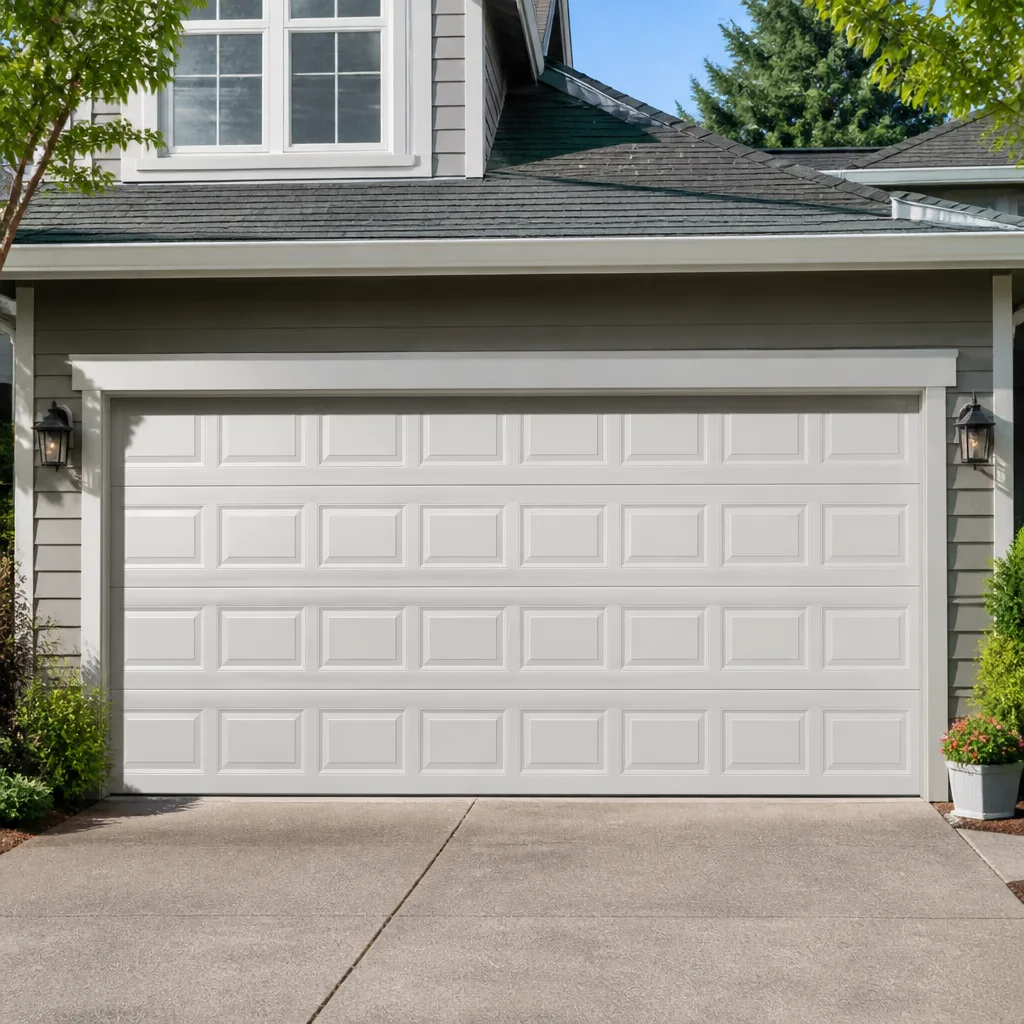 Raised-panel steel
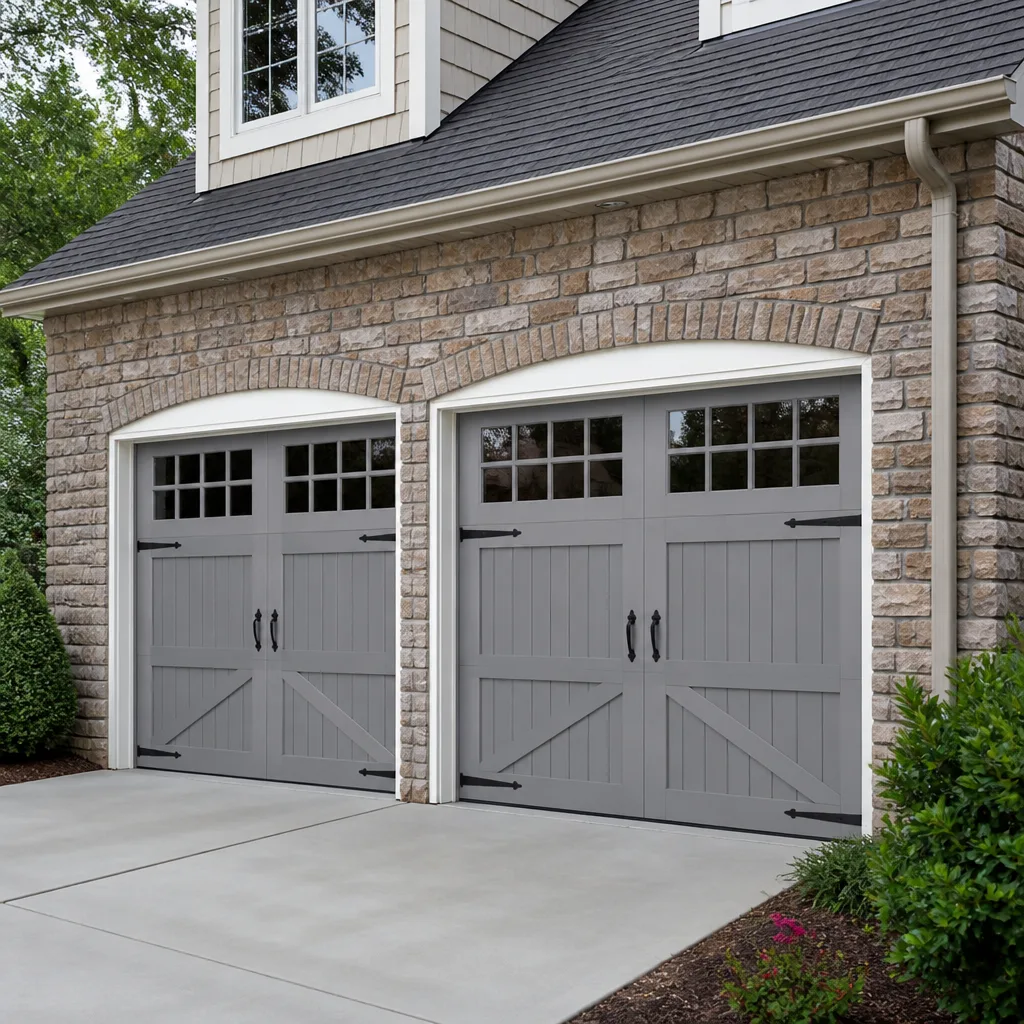 Carriage house
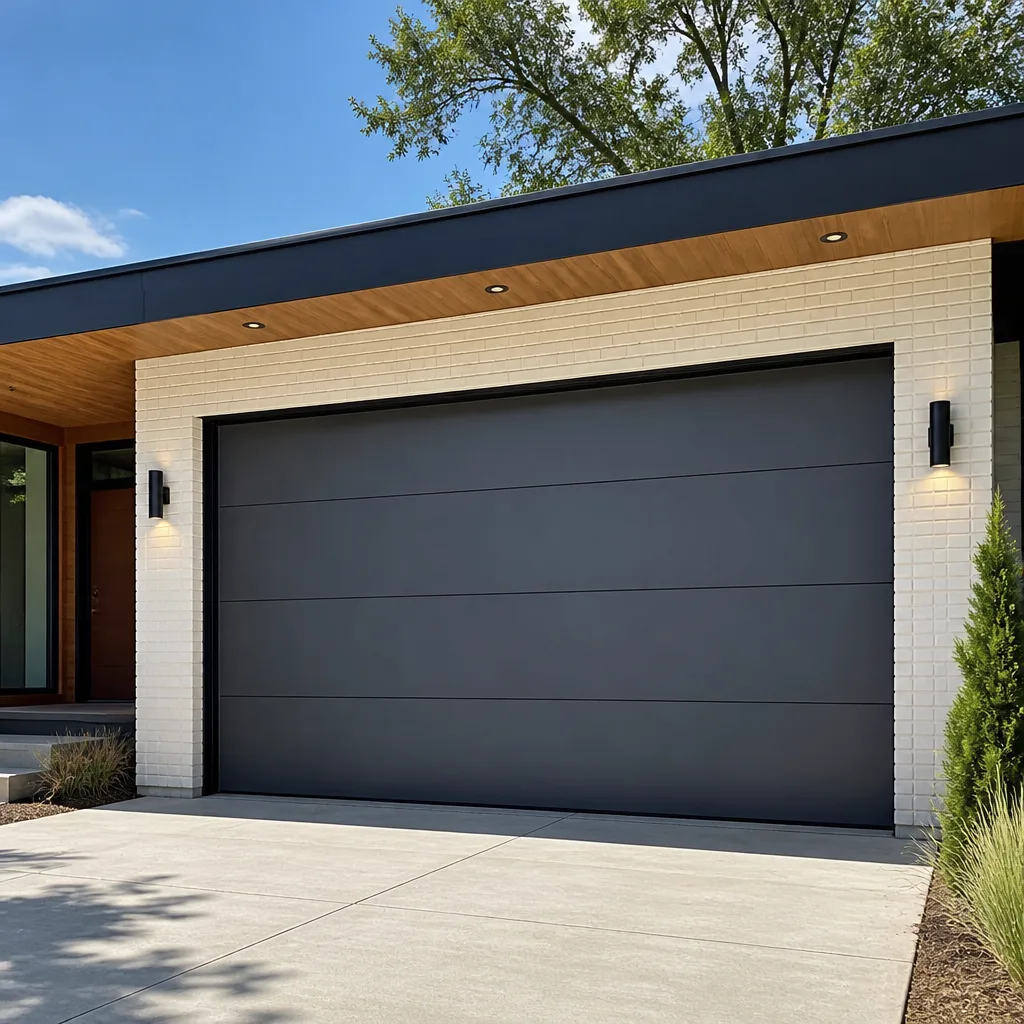 Modern flush
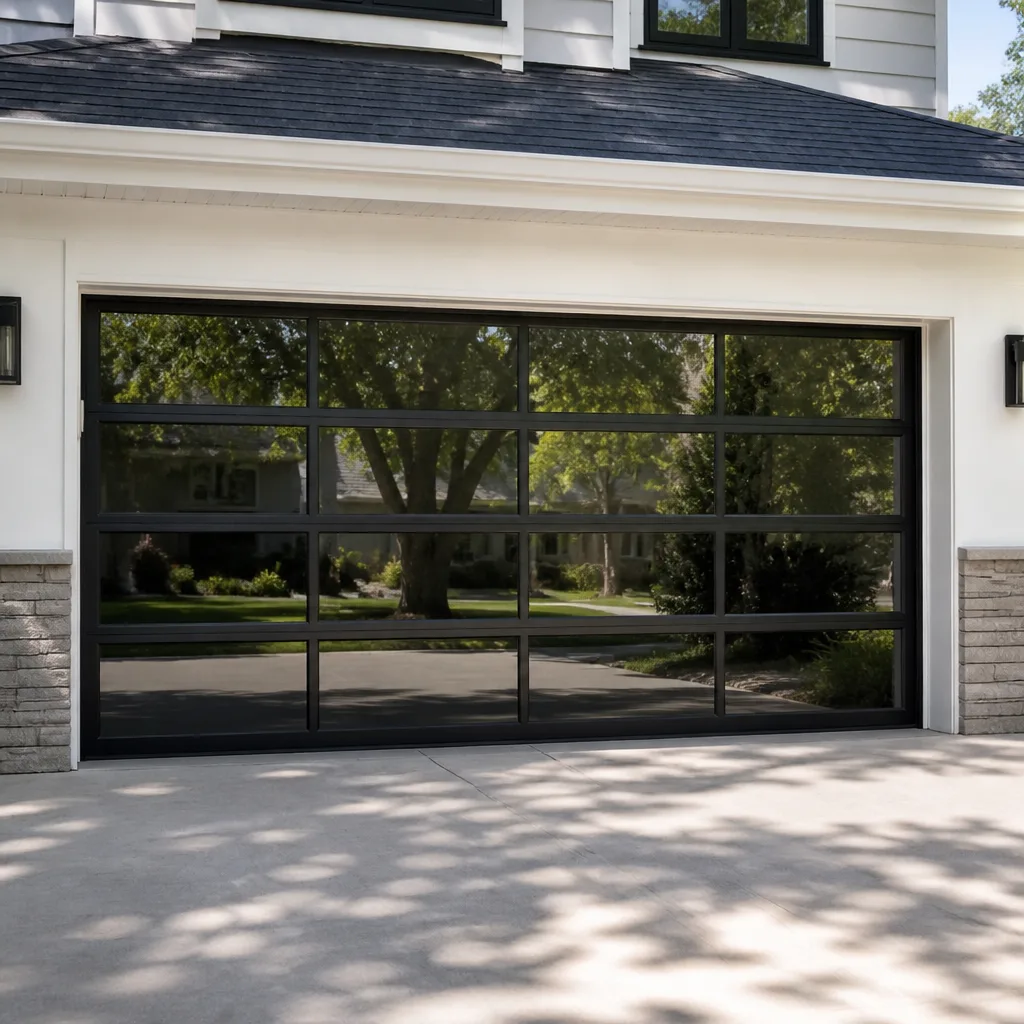 Full-view glass
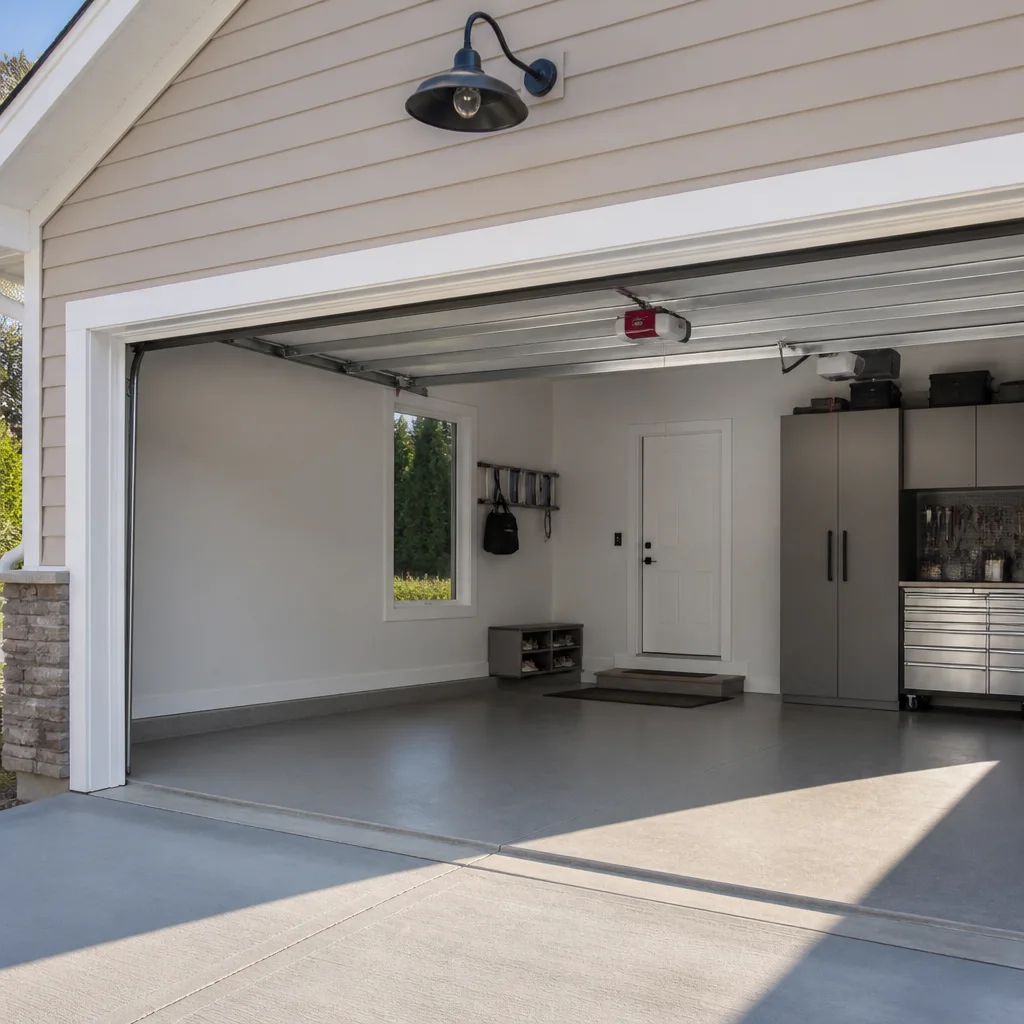 LiftMaster openers
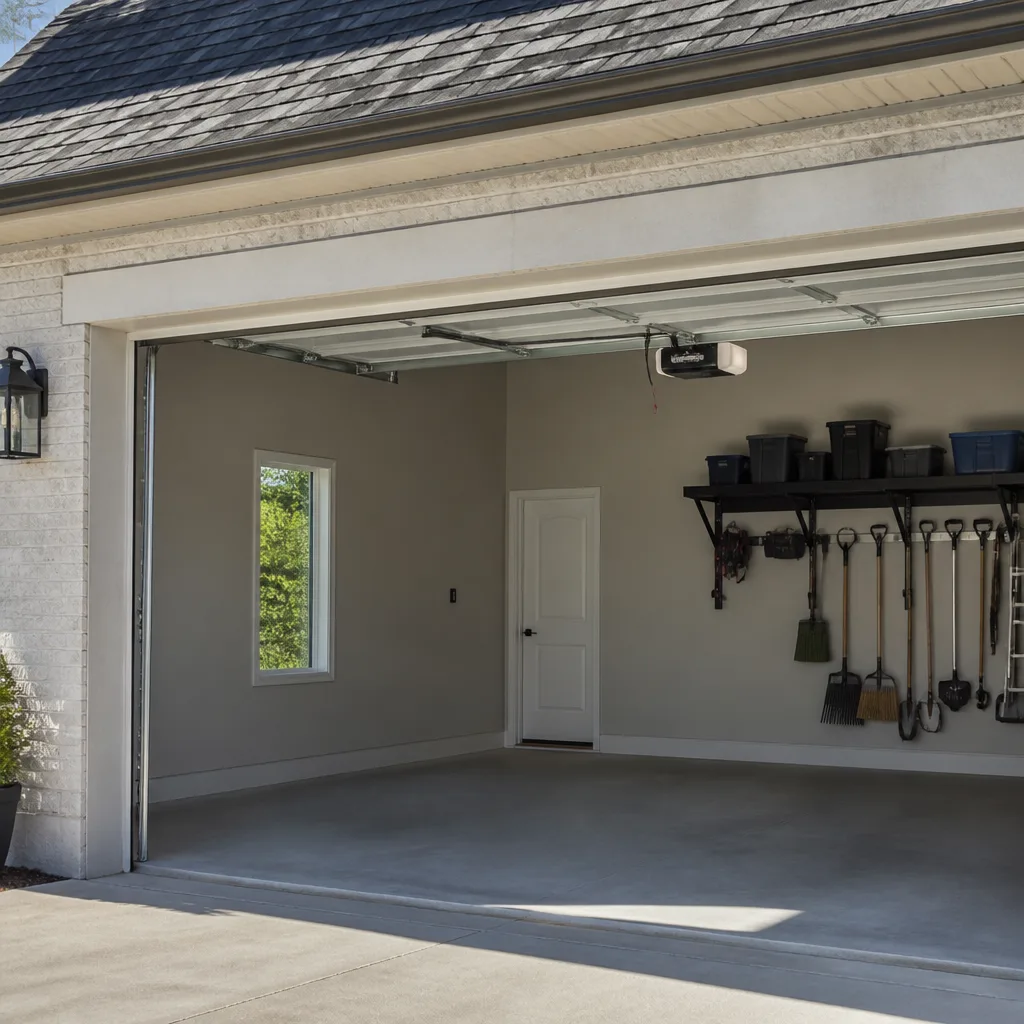 Chamberlain openers
Full 25-point door and opener safety check with every visit - springs, cables, rollers, tracks, and your LiftMaster or Chamberlain opener included
You get a price before we start. It does not change when the pro arrives.
Get your free estimateThe Complete Guide to Garage Doors in Sunset Park
Most Sunset Park garages were built for hand-cranked doors in the 1930s and ’40s. Retrofitting a modern opener into one of those structures without checking headroom clearance first is the single most common reason installs fail or cost twice the estimate. The housing stock here isn’t uniform: attached row houses with interior garages, detached brick garages behind the lot line, and a handful of converted carriage structures each introduce their own constraints on door width, panel sizing, and opener mounting. This guide walks through what’s actually installed in Sunset Park, how each configuration limits your options, and how to choose a spring, opener, or full door that fits the building you have.
Quick Answer
Garage door work in Sunset Park usually comes down to matching the equipment to tight, older structures rather than picking from a catalog. Attached row-house garages typically limit headroom enough that low-profile torsion systems and jackshaft-style openers are the practical choice, while detached brick garages generally accept standard sectional doors and belt-drive openers. Before buying any door or opener here, measure actual headroom, side room, and back room, then confirm the spring type and opener travel length against those numbers, because a mismatch is what drives most unexpected costs.
Styles & brands we work with
- Raised-panel steel
- Carriage house
- Modern flush
- Full-view glass
- LiftMaster openers
- Chamberlain openers
Table of Contents
- How Sunset Park’s Housing Shapes Garage Door Choices
- Sectional vs. One-Piece Tilt-Up Doors: What’s Still Standing Here
- Choosing a Spring System for Sunset Park Ceiling Heights
- Why the Door Brand and Opener Brand Often Don’t Match
- Repair vs. Replacement: When the Frame Decides
- What a New Garage Door Installation Actually Involves
- What Garage Door Work Typically Costs in Sunset Park
- Emergency Situations and When to Call
How Sunset Park’s Housing Shapes Garage Door Choices
Sunset Park is not a suburb, and the garage doors here reflect that. The neighborhood runs from the tight attached row houses near the park itself down through blocks of semi-detached and detached brick buildings, and the garage situation changes block to block. Three configurations dominate, and each one changes what door and opener will actually work.
Attached row-house garages. These are the hardest to retrofit. The garage usually shares at least one wall with the living space, and the ceiling is low because the floor above is the first floor of the house, not open joist space. Headroom is often reduced, sometimes to the point where a standard sectional door’s track curve will not clear. In these setups, side room and back room matter as much as height. An opener that needs a full-length ceiling-mounted rail may not fit at all, which pushes you toward a wall-mounted jackshaft opener.
Detached brick garages. These are common on the lots behind the main house and give you the most flexibility. Ceilings are often taller, the door opening is a straightforward rectangle, and a standard sectional door with a belt-drive opener works without modification. The wildcard here is the frame condition: older brick garages frequently have shifting headers or rotted wood surrounds that need attention before a new door goes in.
Converted carriage and older outbuildings. A smaller number of Sunset Park properties still have one-piece tilt-up doors on older outbuilding structures. These were built before sectional doors dominated the market, and the framing reflects that. Repairing a tilt-up is possible but parts are less standard, and converting to a sectional door sometimes means reframing the opening.
The lesson for Sunset Park homeowners is simple: measure the actual garage before you shop for the door. Headroom, side room, and back room are the three numbers that decide everything downstream.
Sectional vs. One-Piece Tilt-Up Doors: What’s Still Standing Here
Two door designs account for almost everything you’ll see on a Sunset Park garage, and they behave very differently when something breaks. Knowing which one you have tells you a lot about what a repair will involve and how long it will last.
Sectional doors
From the 1970s onward, sectional doors became standard everywhere, including Sunset Park. They’re made of four or five horizontal panels that travel up a curved track and then back along the ceiling. Their repair profile is what most people expect:
- Individual panels can usually be replaced without touching the rest of the door, which is a real advantage on older doors with a few damaged sections.
- Springs, cables, rollers, and hinges are all standard wear items with predictable lifespans.
- Weather sealing is good because each panel edge can carry a seal.
- They need vertical clearance for the track curve plus horizontal space along the ceiling.
For attached row-house garages with tight ceilings, a low-headroom sectional door is often the only sectional configuration that will clear.
One-piece tilt-up doors
The older one-piece tilt-up is still found on some outbuildings and converted carriage structures around Sunset Park. It swings out and up in a single motion, hinged at the top of the opening rather than rolling back. Repair implications are different in three important ways:
- The whole door moves as one unit. There are no individual panels to swap, so impact damage often means replacing the entire door.
- The pivot hardware carries the full weight. The springs, hinges, and pivot points are under different stress than a sectional door’s, and worn pivot hardware is a common failure.
- Clearance requirements are outside. A tilt-up needs open space in front of the garage to swing out plus overhead clearance, so tight driveways or low soffits limit them.
If you’re trying to decide whether to keep a tilt-up or convert to a sectional door, the deciding factors are clearance, frame condition, and how much the door is used. A tilt-up that’s rarely opened and sits on a solid frame can often be repaired and left alone. A tilt-up on a main daily-use garage, with a frame that’s already shifting, is usually worth converting. For a fuller breakdown of what each repair runs to, our garage door repair page covers the everyday fixes and how the estimates work.
Choosing a Spring System for Sunset Park Ceiling Heights
The spring is what makes a heavy door feel light. Get the spring type wrong for the space and the door either won’t balance or it will destroy the opener. In Sunset Park, the right choice usually falls out of ceiling height and door size.
Torsion springs
Torsion springs mount horizontally on a shaft above the door. They’re the modern standard because they’re more durable and more evenly distribute load. What Sunset Park homeowners should know is that torsion springs need clearance above the door to sit on that shaft. In row-house garages with unusually low ceilings, high-lift torsion setups may not fit, and the spring has to be configured for the specific ceiling height. That’s why measuring matters: a torsion spring sized for a tall detached garage will be the wrong fit in a low row-house installation.
Extension springs
Extension springs run along the horizontal tracks above the door and stretch as the door opens. They’re common on older and lighter doors, especially on tilt-up and smaller sections. They also need to be matched to door weight carefully, and they have a reputation for wear that torsion springs outlast. Used correctly, extension springs are perfectly serviceable; used on a door that’s too heavy for them, or with missing safety containment, they’re a hazard.
How to choose for your Sunset Park garage
- Measure the ceiling height at the garage opening and at the rear of the tracks.
- Record the door’s width, height, and approximate weight (or the door’s label if it has one).
- Note whether the garage is attached and shared with living space, which pushes you toward quieter, better-balanced systems.
- Match the spring type to the available clearance, not to what was there before – many older doors were fitted with whatever was on hand.
- Replace springs in matched pairs. Torsion and extension springs are both replaced two at a time when they’re paired, so the door stays balanced.
Springs are the most dangerous component on any garage door. They’re under high tension even in the closed position, and a spring that lets go can cause serious injury. We’re not going to give you a step-by-step for doing this yourself, because it’s exactly the kind of work that should be handled by someone trained for it. If a spring looks stretched, has visible gaps in the coil, or the door feels noticeably heavier than before, treat it as a job for a professional and don’t try to open and close the door to “test” it.
Our specialist service for garage door spring repair is set up specifically for this because so many general handymen either turn it down or get it wrong.
Why the Door Brand and Opener Brand Often Don’t Match
Walk down a Sunset Park block and count the openers. You’ll see a mix of Raynor and LiftMaster units, some older Chamberlain and Genie faces, and plenty where the door carries one brand and the opener carries another entirely. That mismatch isn’t a problem on its own – the opener doesn’t need to match the door’s brand – but it matters when something breaks, because compatibility and calibration requirements differ by manufacturer.
Why the mismatch is so common here
Older Sunset Park homes have been updated in stages. A door might be replaced while the opener stays, or an opener gets replaced while the door stays. Sometimes a homeowner takes a hand-me-down opener from a family member and fits it. Each of those moments can create a brand mismatch, and after a few decades of updates, almost every garage has a mixed setup.
What actually determines compatibility
The opener doesn’t care what name is on the door. What it cares about is:
- Door weight. The opener is rated for a specific lifting capacity, and the door’s actual weight has to fall within it.
- Door balance. If a door isn’t balanced, the opener compensates with extra force, and that’s where strain and failure start.
- Travel limits and force settings. Every opener has to be calibrated to the door’s geometry. A LiftMaster opener calibrated for one door won’t work unmodified on a different-sized door without resetting limits.
- Safety reversal systems. Modern openers rely on photo-eye sensors and pressure-sensing, and those need proper mounting at the right height and line of sight.
Brand matters because the settings and parts differ. Chamberlain and LiftMaster units share many service costs and settings conventions, but a Genie and a Raynor won’t necessarily use the same calibration approach. That’s why we work on all the main brands: Raynor, LiftMaster, Chamberlain, and Genie among them, along with Clopay, Amarr, Wayne Dalton, and Craftsman doors. Working on your brand means the right parts and the right calibration for whatever combination is on your garage. When it’s the opener itself failing, our garage door opener repair page spells out how we diagnose and fix it.
Smart openers and low-clearance garages
Modern smart openers, including LiftMaster and Chamberlain’s connected models, are increasingly common in Sunset Park, but they have the same clearance constraints as conventional ceiling-mounted units. A wall-mounted jackshaft opener is often the better fit in a low row-house garage, even though it drops some of the ceiling-mounted rail space. The right choice depends on the garage, not the trend.
Repair vs. Replacement: When the Frame Decides
A repair is usually cheaper and faster, and on solid structures it’s the obvious call. But in Sunset Park, frame and header condition regularly turn what looks like a repair into a full replacement. The good news is that the deciding factor is measurable.
When repair is the right call
- The track is intact and vertical, and the door runs smoothly from bottom to top.
- The spring is the problem, and the frame and hinges are sound.
- A single panel is damaged and can be sourced in the same profile and finish.
- The opener is failing but the door itself is balanced and operating correctly.
When replacement is unavoidable
- The header above the door is sagging or cracked. The header carries the track load, and if it’s failing, no amount of new hardware will make the door run true.
- The brick or wood frame has shifted. A racked opening means the tracks can’t sit parallel, and the door binds no matter how it’s adjusted.
- The opening was built for a tilt-up and won’t accept a sectional door without reframing. The reframing cost is real, but it’s a one-time expense and often cheaper than fighting the old configuration indefinitely.
- Damage spans multiple panels. If four of five panels are compromised, a full replacement is usually more sensible than a partial rebuild.
- The door has structural rot or corrosion at the panel joints. Panel repair on a failed panel usually fails again quickly.
If your Sunset Park garage has any of these conditions, it’s worth having someone look at the frame before committing to a repair. A failed spring replacement on a failing header is money thrown at a problem that hasn’t been fixed. For the bigger picture of what’s involved in a full swap, our garage door installation page walks through the process.
What a New Garage Door Installation Actually Involves
An installation in Sunset Park is never just “hang a new door.” The job is a sequence, and each step depends on what the previous one reveals. Here’s how it typically goes.
- Measure and confirm. We measure the opening, headroom, side room, and back room, and check the header and frame for shift or sag. We confirm what door type will physically fit the garage.
- Assess what needs to change. If the frame is sound, the new door can go straight on. If not, we identify what has to be repaired or reframed before the door goes in.
- Remove the old door and hardware. The old door, tracks, springs, and opener come out. Springs are released safely, since they’re under tension and this is the riskiest moment in the job.
- Install new track and frame. Tracks are set parallel and level to the opening. On a row-house garage with a low ceiling, this is where the low-headroom configuration gets built in.
- Install panels and hardware. Panels go on in sequence, hinges and rollers are fitted, and the door is checked for square.
- Balance the door. The new spring system is tensioned and adjusted so the door lifts with even force from bottom to top. An unbalanced door strains the opener and shortens its life.
- Fit and calibrate the opener. Travel limits, force settings, and safety reversal are set for the specific door and opener. This is the step that brand-specific knowledge matters for.
- Test the full cycle. The door is run through multiple open and close cycles, and the safety sensors are verified.
Timing depends on whether it’s an in-stock size for a standard opening or a custom door for a non-standard Sunset Park garage. That’s why installation is measured, ordered, and scheduled rather than done same-day. The written estimate gives you the door price, the hardware price, and the labor, and the price is agreed before any work starts. If your garage needs a new door rather than a repair, you can call (855) 709-6141 for a free measure and a written estimate.
What Garage Door Work Typically Costs in Sunset Park
The numbers below are typical ranges for the kind of work we see in Sunset Park. They’re estimates, not quotes; the written quote is the number you pay, and the written estimate is what sets the final price. Spring pricing is per spring. Matched pairs are the norm and usually cost about twice the per-spring figure.
- Single torsion spring replacement: typically $180 to $340 per spring. A matched pair is usually about double that.
- Single extension spring replacement: typically $120 to $260 per spring. A matched pair is usually about double that.
- Broken cable replacement: typically $150 to $320, depending on the level of disassembly needed.
- Track realignment or track section replacement: typically $150 to $400.
- Panel replacement: typically $200 to $600 depending on panel size and finish matched.
- Opener repair or replacement: typically $180 to $550, higher for smart openers and jackshaft units.
- Full door replacement with opener: typically $1,200 to $3,500 for a standard sectional door plus opener, more for a custom opening.
The two variables that most change these numbers in Sunset Park are the door type (a tilt-up with non-standard hardware can push cost) and clearance (a low row-house garage needs more careful installation). The written estimate accounts for both before work begins, and the price is agreed before we pick up a tool. Call (855) 709-6141 for a free estimate.
Emergency Situations and When to Call
A garage door that fails is one thing. A garage door that fails while it’s open, or that won’t close and stays open overnight, is something else. In Sunset Park, where many garages sit behind the house or share a wall with living space, an open or broken door is both a security and a safety issue, and it’s worth treating as one.
The situations that warrant an emergency call:
- A broken spring with the door stuck open. You cannot safely lower the door, and an open garage overnight is a target.
- A door that has come off the track. Trying to force it back on can bend panels or cause injury; leave it alone and call.
- An opener that reverses mid-cycle or a door that closes on its own. That’s a safety reversal problem and the door should not be operated until it’s inspected.
- A door that won’t close and won’t stay closed. If someone is trying to secure the property overnight, an emergency response is the right call.
- Visibly damaged spring with the door closed. Don’t open it to check. Call for a same-day assessment.
Emergency service is a real part of what we do, not an add-on. We’re set up to take the call at any time, including Sundays; we’re closed on Saturday. If your door fails then, call and we’ll book you for Sunday. Our technicians have up to 8 years of experience, and we’re trained on LiftMaster, Chamberlain, Genie, Clopay, Amarr, Wayne Dalton, Craftsman, and Raynor systems, so the right parts and the right answer are one call away regardless of what’s installed on your door.
Common Mistakes to Avoid
- Buying an opener before measuring headroom. In Sunset Park row houses, the ceiling often can’t take a standard ceiling-mounted rail. Measure the garage first, then pick the opener that fits the space.
- Replacing one spring instead of the pair. Springs that are paired are paired for a reason: when one fails, the other is close behind, and replacing one leaves the door unbalanced and the opener strained.
- Mismatching the door type to the space. A tilt-up on a tight driveway with a low soffit is a daily fight. A sectional door designed for the space rarely is.
- Ignoring the frame when repairing the mechanism. A spring replacement on a garage with a sagging header is temporary. Look at the frame before you pay for the repair.
- Assuming door brand and opener brand have to match. They don’t. What has to match is the opener’s rated capacity to the door’s actual weight and balance.
- Forcing a door back onto the track. A door off the track is a safety situation, not a handyman situation. Panels and fingers are both on the line.
- Trusting an estimate that doesn’t account for the building. Any quote that isn’t based on the actual clearance, side room, and frame condition for a Sunset Park garage will change when the installer sees the opening.
See the difference
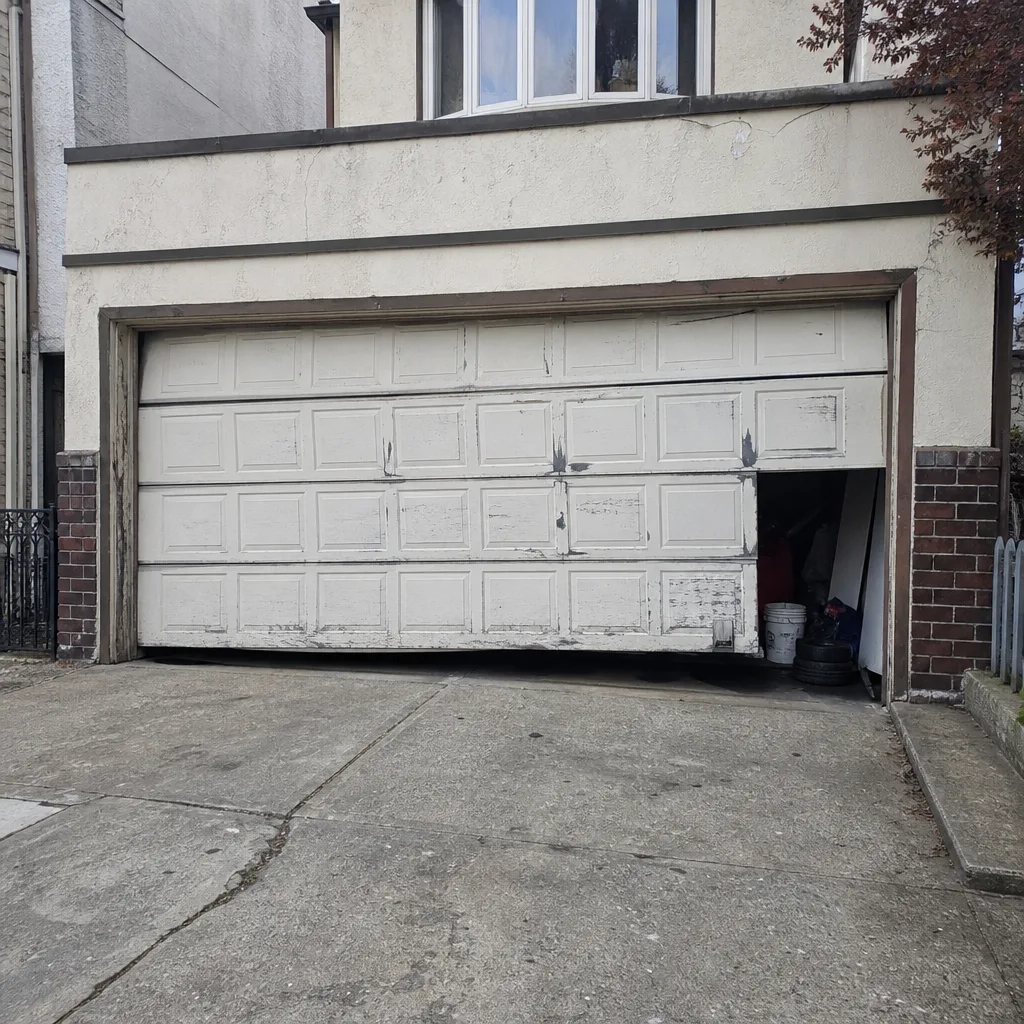 Before
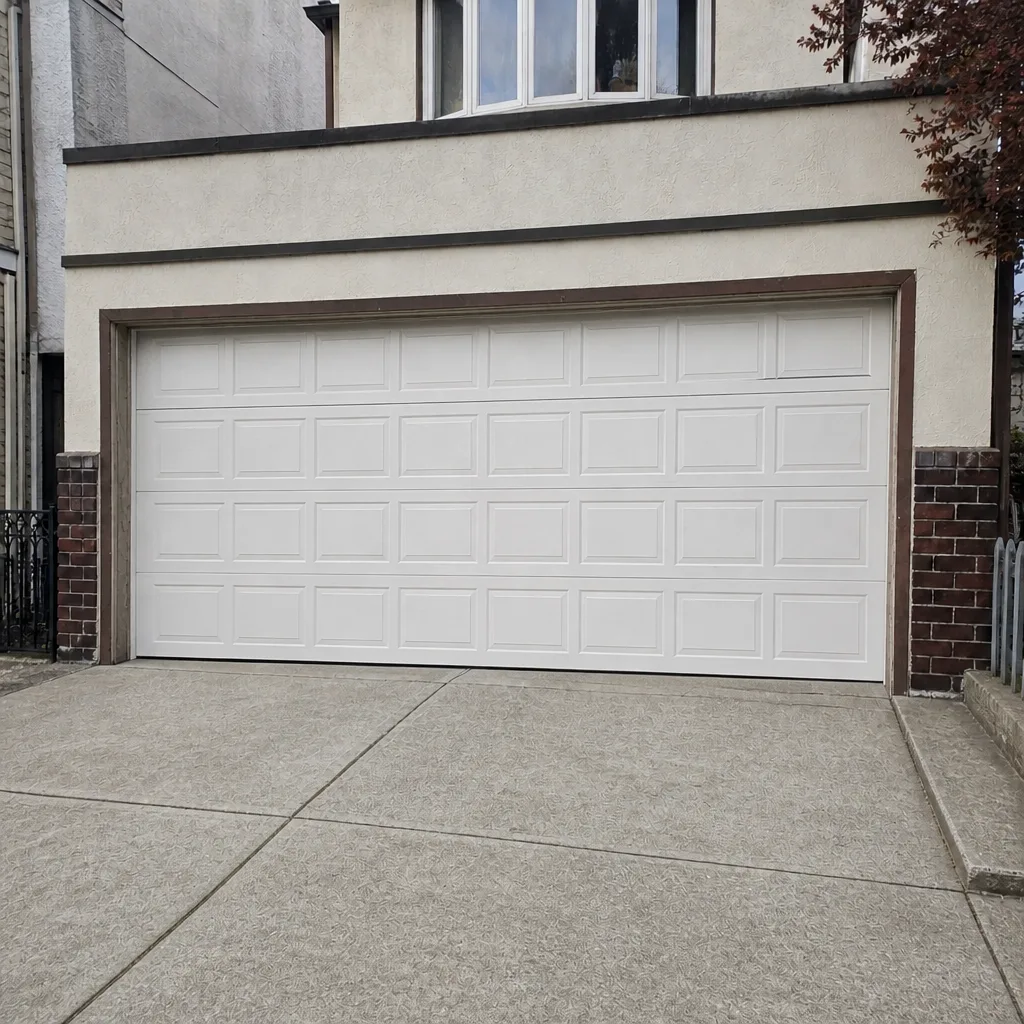 After
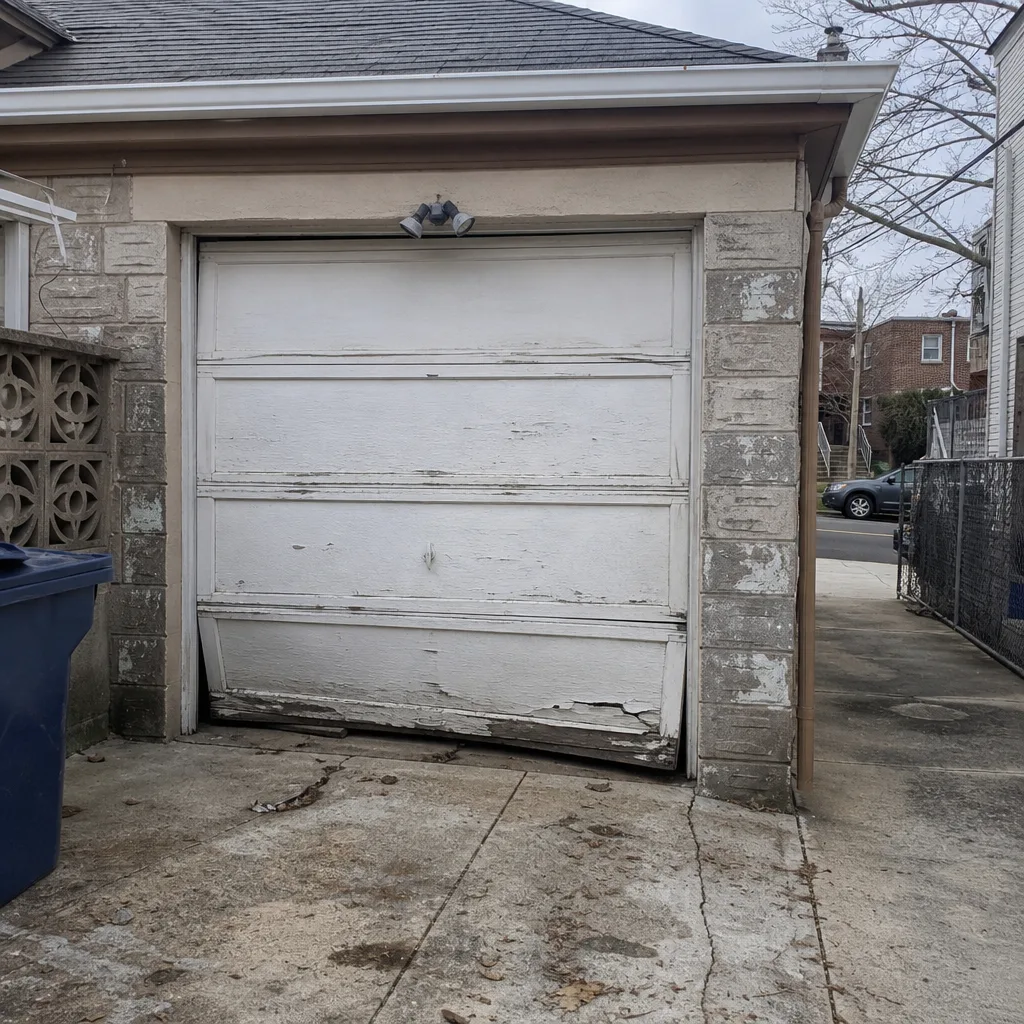 Before
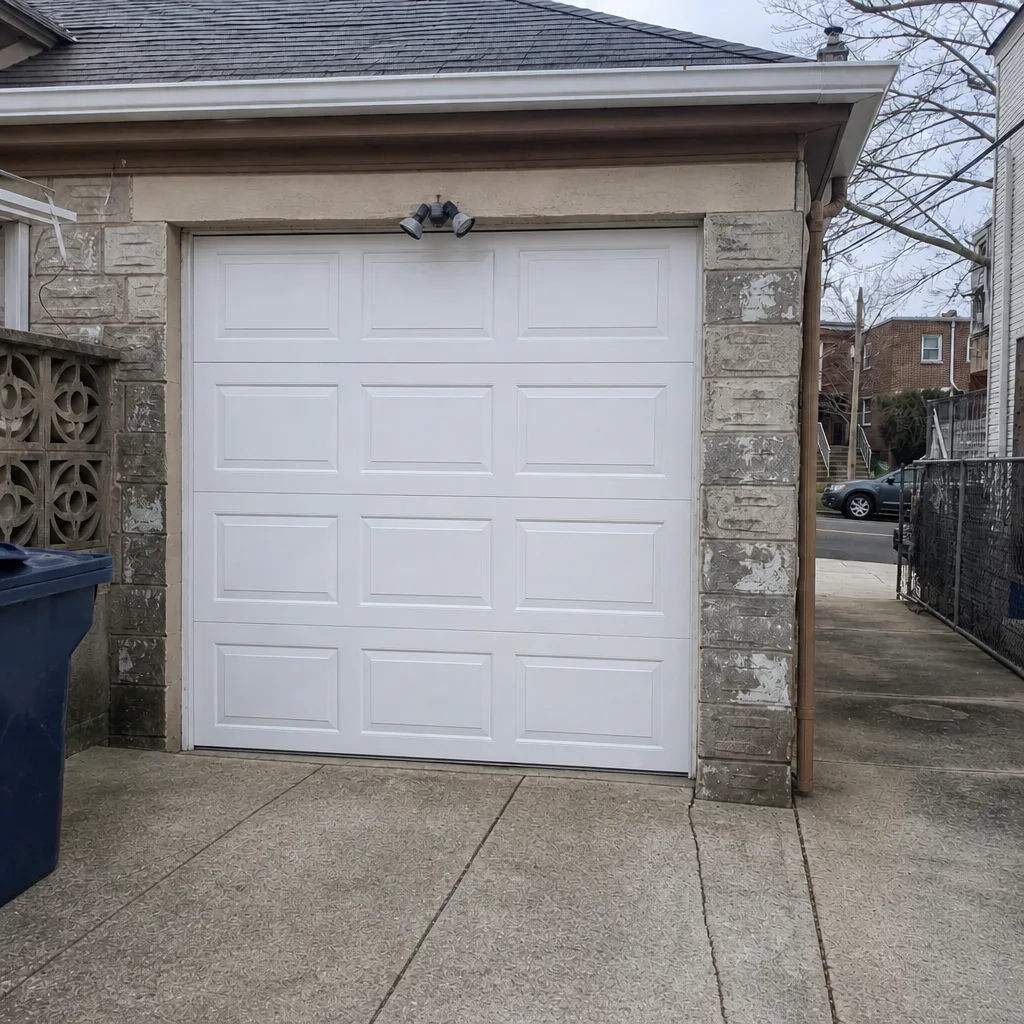 After
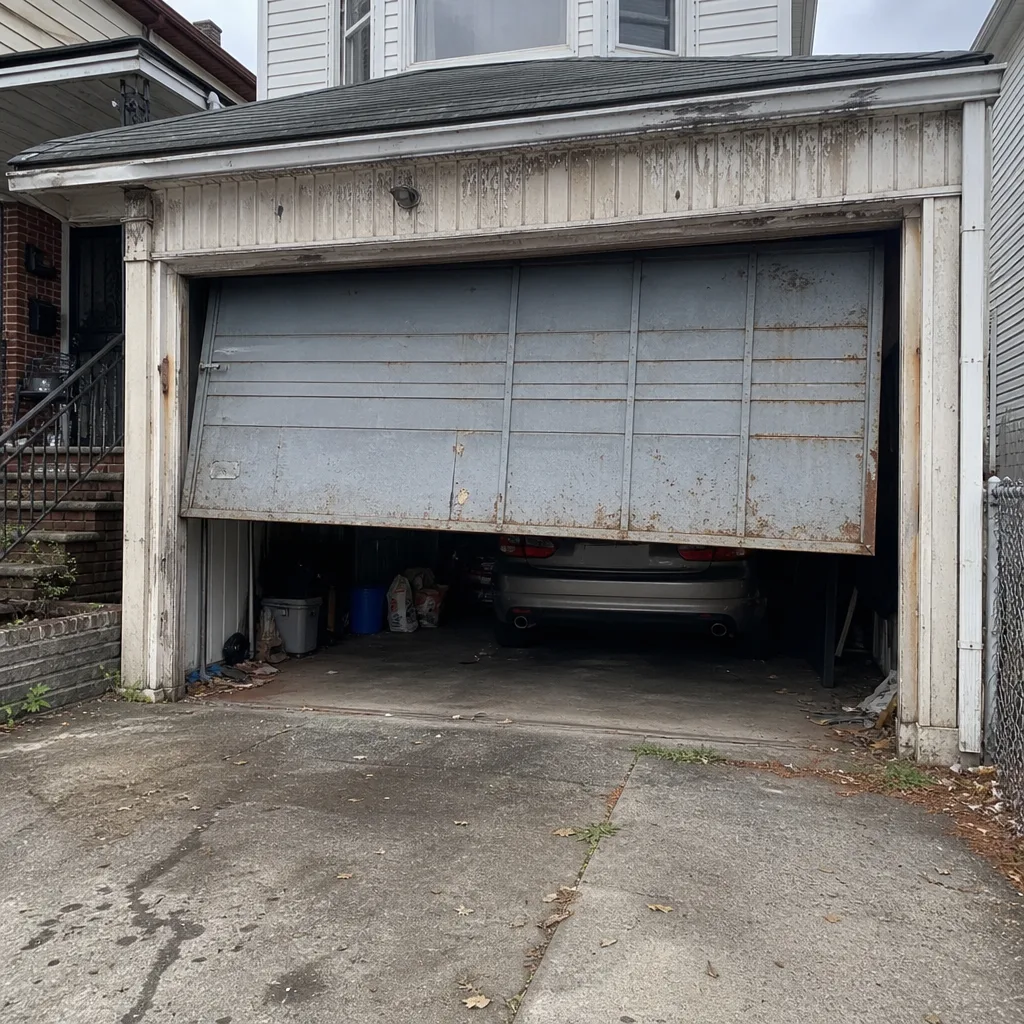 Before
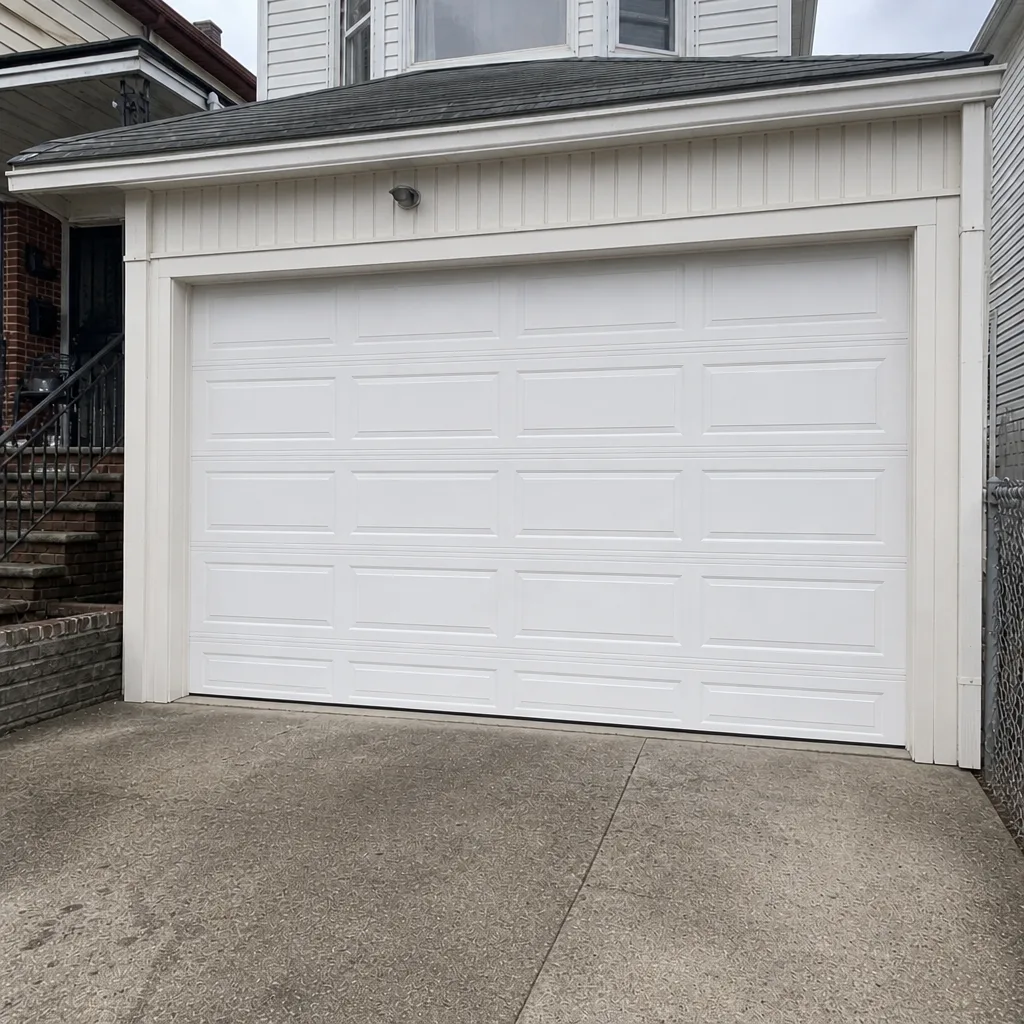 After
When to Call a Professional
If a spring has broken or looks stretched, a cable has come loose, or the door has jumped its track, call a professional before operating it again. Those are the high-risk situations, and they’re the exact ones where a self-repair attempt turns into a hospital visit or a much bigger bill. Call us if the door feels noticeably heavier than it used to, if it reverses on its own, or if the opener runs but the door doesn’t. Call us if you’re considering a replacement but aren’t sure whether the frame will hold a new door. And call us if you’ve gotten a quote from someone else and the number seems off, so we can walk you through what’s actually involved for your specific Sunset Park garage.
Garage Door Repair Sunset Park offers free estimates in Sunset Park. Call (855) 709-6141, and the price is quoted and agreed before any work starts.
Frequently Asked Questions
Typical garage door repairs in Sunset Park range from about $120 for a single extension spring up to around $600 for a larger panel replacement, with most common fixes in the $150 to $400 range. Full door replacement is typically $1,200 to $3,500 depending on door type, opener, and whether the frame needs work. The written estimate is the number that matters. Call (855) 709-6141 for an exact quote; estimates are free.
Same-day service is available for repair and emergency situations, depending on the day’s schedule. Spring failures, doors off the track, and doors that won’t close are the cases where speed matters most. Installation work is measured, ordered, and scheduled, not same-day. Call (855) 709-6141 and we’ll book the soonest available time.
No, the written estimate sets the price before work starts, and we don’t change it once we’re on site. The one exception is if we open the door and find a separate problem that wasn’t visible during the estimate, like a cracked header. In that case we stop and talk to you before anything additional is done. Call (855) 709-6141 for a free estimate.
The local professionals we connect you with are licensed and insured as their state requires. Springs, cables, and openers are all high-risk components, and working with a vetted local pro protects you if something goes wrong. If you have questions about credentials before booking, call (855) 709-6141 and we’ll answer them directly.
Opener brand and door brand don’t have to match, and in Sunset Park they usually don’t because homes have been updated in stages over the years. The opener needs to match the door’s weight, balance, and travel limits, not its nameplate. We service Raynor, LiftMaster, Chamberlain, Genie, Clopay, Amarr, Wayne Dalton, and Craftsman systems, so the mismatch on your garage is one we see constantly and can work with. Call (855) 709-6141 if the opener isn’t behaving.
Usually yes, but it depends on the opening and the frame. A tilt-up door needs overhead and outward swing room, and a sectional door needs ceiling clearance and track space, so the conversion is only straightforward when the garage has the headroom for a sectional track. If the frame or header has shifted, reframing is part of the job. Call (855) 709-6141 to have the opening looked at before committing.
Most cities require a permit for structural work on a garage opening, but the rules vary by building type, and a straight door-for-door replacement sometimes doesn’t require one. Check with the city’s building department before scheduling installation so there are no surprises. Our installation is scheduled around whatever the permit timeline requires. Call (855) 709-6141 with questions about what to expect.
The Bottom Line
Sunset Park garages are a mix of attached row houses, detached brick structures, and older carriage buildings, and each one puts specific limits on the door, spring, and opener that will actually work. The mistakes that drive most of the cost in this neighborhood come from skipping the measuring step: buying an opener that doesn’t clear the ceiling, replacing a door that fights the frame, or choosing a spring system for the catalog instead of the garage. Get the clearance, frame condition, and door weight right first, and everything else follows. For a free estimate in Sunset Park and a written price before work starts, call (855) 709-6141.
Written by the team at Garage Door Repair Sunset Park.