Last updated November 21, 2026
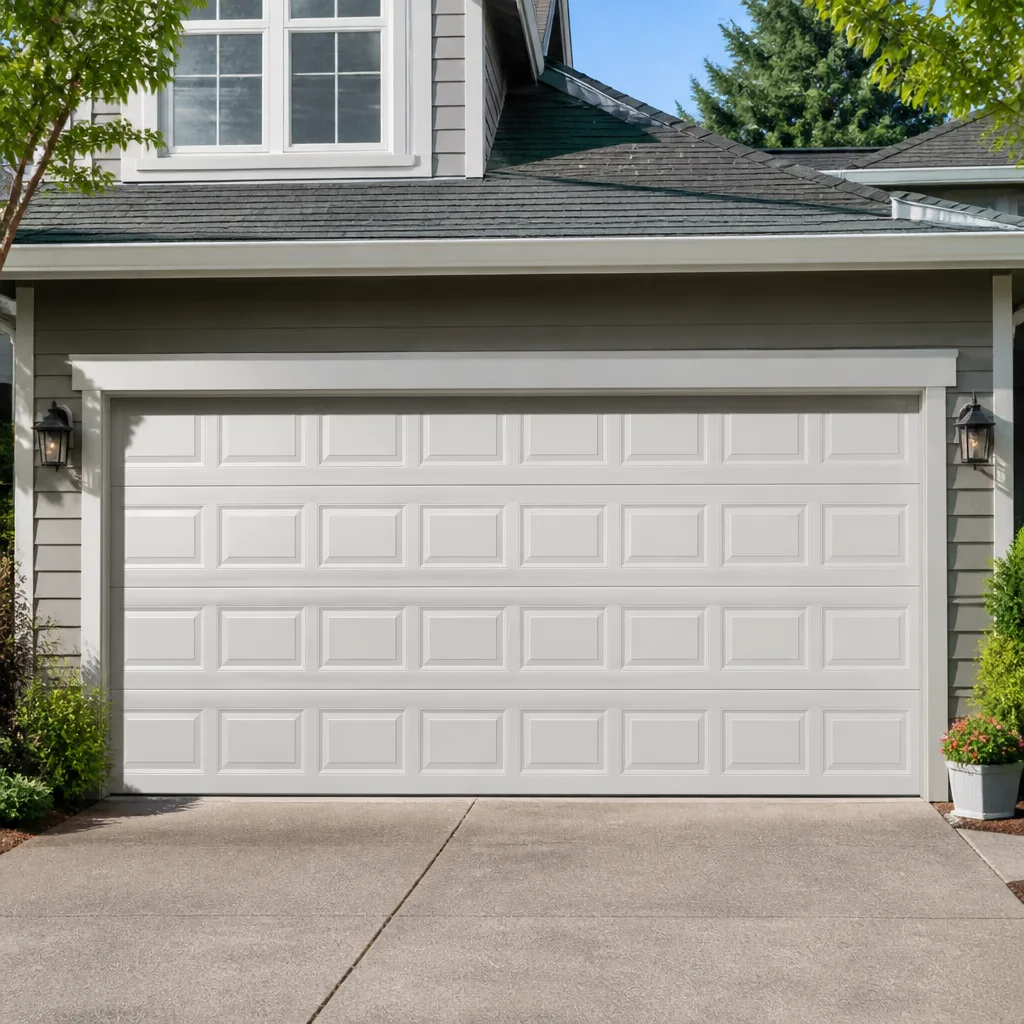 Raised-panel steel
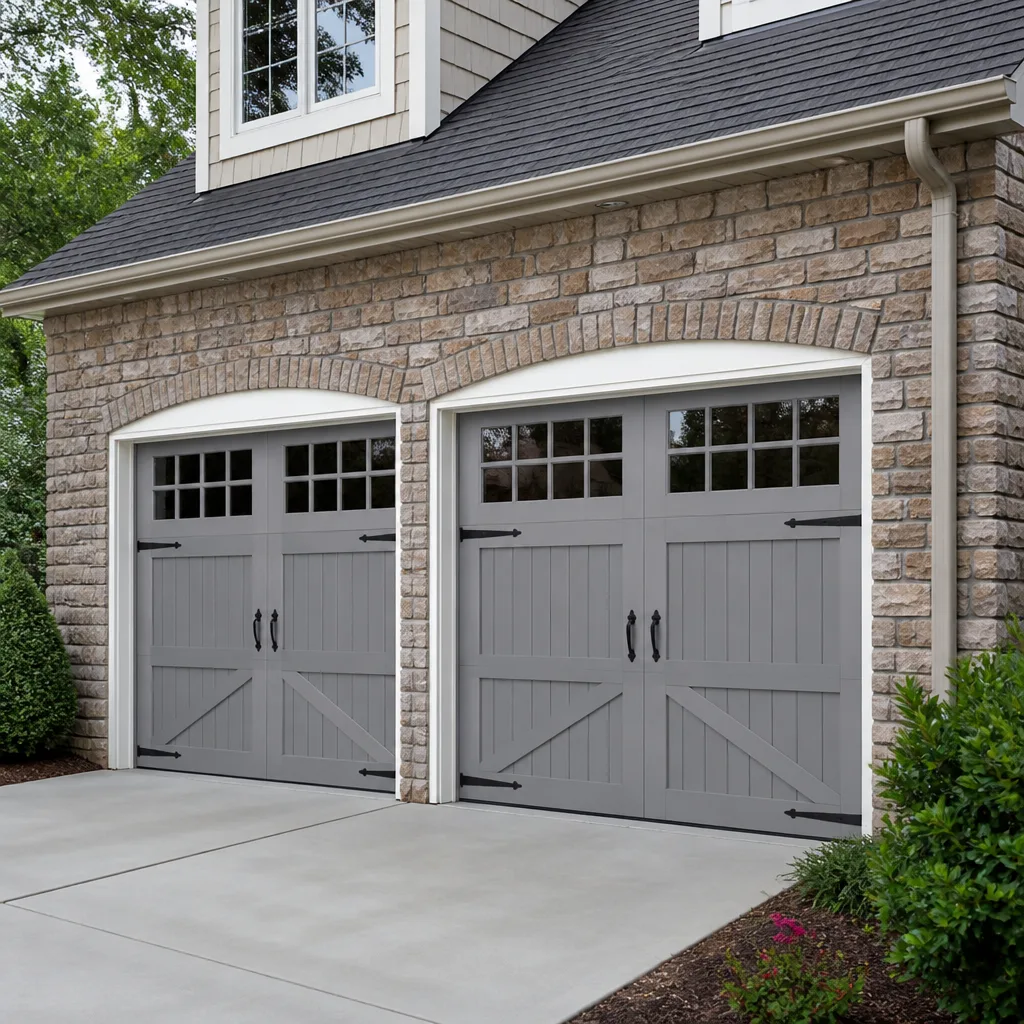 Carriage house
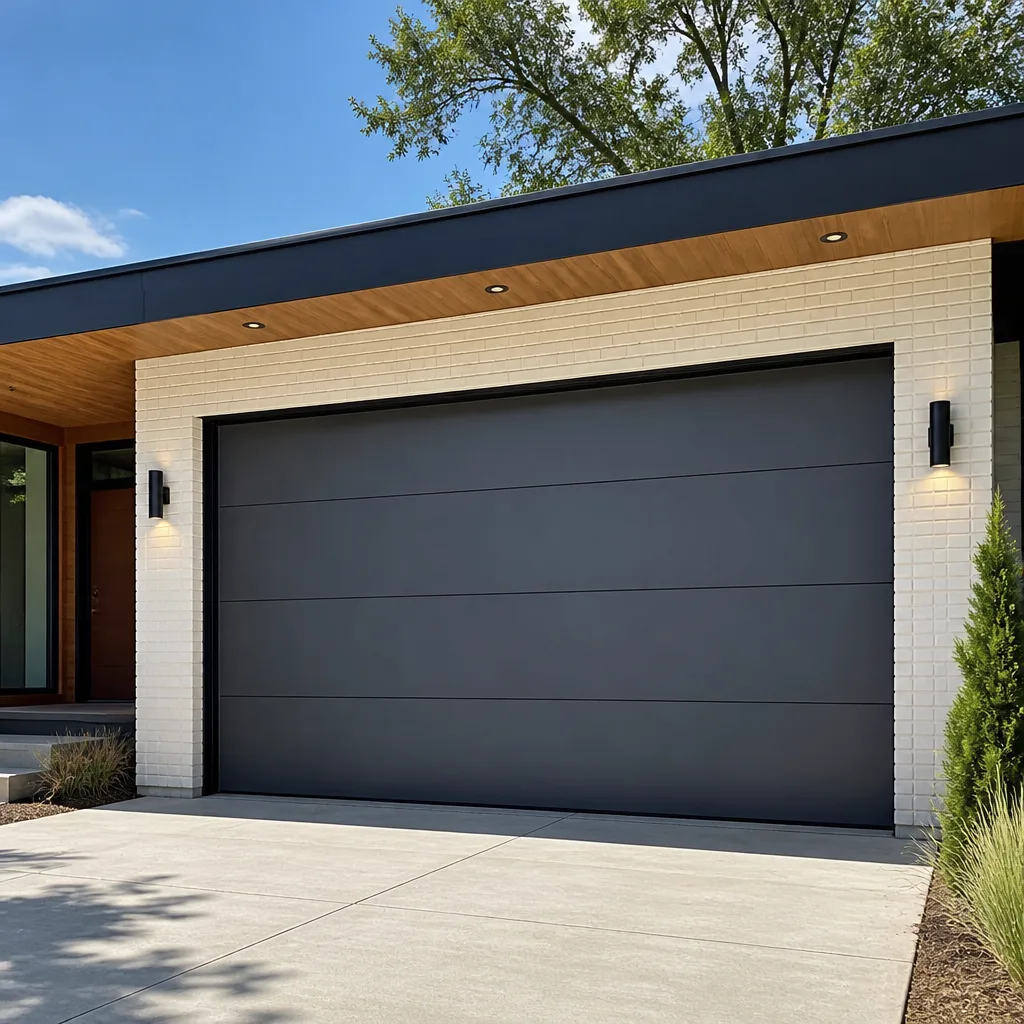 Modern flush
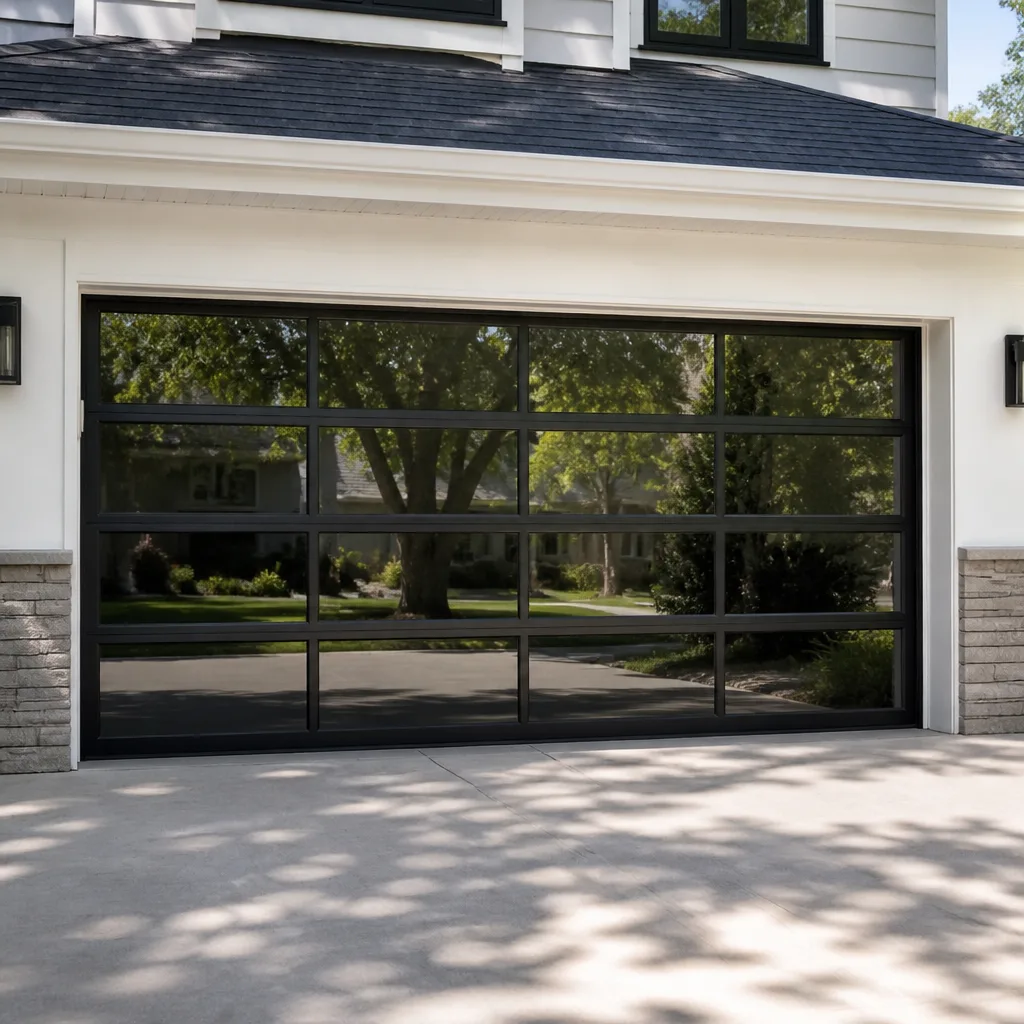 Full-view glass
 LiftMaster openers
 Chamberlain openers
Full 25-point door and opener safety check with every visit - springs, cables, rollers, tracks, and your LiftMaster or Chamberlain opener included
You get a price before we start. It does not change when the pro arrives.
Get your free estimateSeasonal Garage Door Care for Sunset Park: Year-Round Homeowner’s Guide
Most garage door advice you’ll find online was written for a place with four gentle seasons and no open water nearby. Sunset Park isn’t that place. Doors here sit between Upper New York Bay and the brownstone-and-brick blocks climbing toward Fifth Avenue, and that position changes what wears out and when. The common misconception is that a garage door is a set-and-forget piece of equipment that only needs attention when something snaps. In our experience, the doors that fail are usually the ones nobody looked at between failures. This guide walks through what each season actually does to a door in Sunset Park, what to check before the weather turns, and when a small issue is about to become an expensive one.
Quick Answer
Garage doors in Sunset Park need seasonal attention because the neighborhood’s exposure to Upper New York Bay drives a specific stress cycle: humid, salt-laden air in summer, freeze-thaw movement near the waterfront in winter, and wind load from open bay exposure all year. The short version is to lubricate with a corrosion-inhibiting product before winter, inspect cables and bottom seals after the thaw, watch for panel binding during heat waves, and have torsion springs re-checked after any significant storm. A door that gets this routine attention lasts far longer than one that only sees a technician when it breaks.
Styles & brands we work with
- Raised-panel steel
- Carriage house
- Modern flush
- Full-view glass
- LiftMaster openers
- Chamberlain openers
Table of Contents
- Why Sunset Park Doors Age Differently
- Fall Prep: Corrosion-Inhibiting Lubrication Before Winter
- Winter: Freeze-Thaw Cycles and Bottom Weatherstripping
- Spring: Post-Winter Inspection for Cable Fraying
- Summer: Thermal Expansion and Panel Binding
- Year-Round: Bay Wind Exposure and Spring Calibration
- The Sunset Park Seasonal Checklist
- Common Mistakes to Avoid
Why Sunset Park Doors Age Differently
A garage door a half-mile from the Sunset Park waterfront lives in a harsher environment than one up the slope toward Borough Park or over in Flatbush. Rain isn’t the problem. The problem is what’s suspended in the air on a humid day near Upper New York Bay: fine particulate that settles into the tightest gaps on your door hardware and stays there. Torsion spring coils, cable strands, hinge pins and roller bearings all collect it. Overnight, with moisture in the air, that residue becomes a slow corrosive film on bare metal.
That’s why a door close to the water can show spring and cable wear well ahead of a door of the same age further inland. It’s not that the coastal door is worse made. It’s that the metal is under a different kind of attack.
Add the wind. Sunset Park’s position means the bay funnels steady air movement across rooftops and through open garages, and a gusty day puts load on a door that an inland block never sees. Over a season, that load works on torsion springs and balance. A door that felt fine in still air can start to feel heavy or drift down on its own after a run of windy weather.
None of this means you need to worry. It means the calendar matters here more than it does elsewhere. The sections below break down what each season asks of your door.
What “seasonal” actually means for hardware
Seasonal care isn’t about cleaning panels. It’s about the moving parts and the seals, and the order you check them in. Metal expands and contracts, lubricant thickens and thins, weatherstripping flexes and re-seats, and springs take on and release load. Each of those behaviors peaks at a different time of year. Miss the peak and you’re catching up on damage instead of preventing it.
Fall Prep: Corrosion-Inhibiting Lubrication Before Winter
Fall is the single most important window for a Sunset Park garage door, and the reason is simple: whatever you put on the metal in October is what protects it through the wettest, coldest stretch of the year. Standard silicone spray is fine for a sheltered inland door. Near the water, we recommend a lubricant formulated to inhibit corrosion, not just reduce friction.
The difference matters. A general-purpose spray coats a part and makes it move smoothly, but it doesn’t do much to hold back the corrosive film that settles on bare metal. A corrosion-inhibiting lubricant leaves a protective layer that clings to the surface and displaces moisture. On torsion springs, cables and hinges, that layer is doing real work all winter.
What to lubricate before winter
- Torsion springs – a light, even coat along the coil, applied with the door closed and the springs at rest
- Cable strands – visible sections only, never the tensioned span under load
- Hinge pins – one drop per hinge, worked in by opening and closing the door a couple of times
- Roller bearings and stems – the metal stem, not the nylon or steel wheel face
- Track curves and the vertical-to-horizontal transition – a thin film, wiped so it doesn’t collect grit
What you don’t lubricate matters just as much. The track itself should stay clean and dry. Grease in a track channel turns into a paste with road dust and grit, and that paste wears rollers faster than a dry track ever would.
Why the timing is tight
Lubricant needs to be applied before the first hard freeze, because once temperatures drop the product doesn’t spread as well and it sits on top of the metal instead of working into it. If you’re doing it yourself, get it done while the weather is still mild. If you’d rather have it handled correctly, we work on doors across Sunset Park and can take care of the fall lubrication and a full hardware inspection at the same visit.
Winter: Freeze-Thaw Cycles and Bottom Weatherstripping
Winter in Sunset Park brings a cycle that inland guides tend to skip: repeated freezing and thawing near the waterfront, where the bay moderates temperature but doesn’t eliminate it. Water gets into a gap, freezes, expands, thaws, and does it again. The place that shows this most clearly is where your bottom weatherstripping meets the concrete floor.
Most garages in the neighborhood have a poured concrete slab, and those slabs move. A hairline crack at the door’s threshold is enough for meltwater to seep in. When it freezes, it lifts and stresses the rubber seal. Do that a few dozen times over a winter and the adhesive bond at the bottom of your door starts to fail, or the seal itself tears along its edge.
What to watch for during winter
- Check the bottom seal for adhesion at the corners first. Corners peel before the middle does, because that’s where water collects and where the seal flexes most.
- Look for a visible gap between the door and the floor when closed. A thin line of daylight means cold air, water and pests are getting in.
- Listen for a change in the door’s sound. A door that suddenly sounds louder or rougher on the way up may have ice in the track channel or a frozen roller.
- Keep the threshold clear of snow and standing water. The less meltwater pooling at the base, the less freeze-thaw stress the seal takes.
If your bottom seal has already lifted or torn, replacing it is a small job that saves the door’s bottom section from water damage. That’s worth doing before the next freeze rather than after.
Springs in the cold
Cold makes steel less forgiving. A torsion spring that’s already near the end of its service life is more likely to fail in a cold snap than in mild weather. If your door has started to feel noticeably heavier to lift by hand, or the opener strains more than it used to, don’t wait for the snap. Spring repair is one job we’d rather do proactively than in an emergency.
It also needs saying plainly: torsion springs are under extreme tension and are one of the most dangerous parts of any garage door to touch. We cover spring replacement as a routine service, and we strongly advise against adjusting or removing a spring yourself. If you suspect a spring problem in Sunset Park, the safe move is to stop using the door and call a trained technician.
Spring: Post-Winter Inspection for Cable Fraying
Once the thaw sets in, do a focused inspection of your cables. Winter is hard on them for a reason specific to this neighborhood’s weather pattern: meltwater runs down the door, gets into the track channel and the cable runs, and refreezes overnight. Ice in a track channel doesn’t just add friction. It nudges the cable against the edge of the drum and the track, and a cable that’s been rubbing against a frozen edge all winter can develop frayed strands.
Frayed cables are a genuine safety issue, not a cosmetic one. A cable under tension that fails suddenly can whip with real force. If you spot fraying, broken strands or a cable that’s jumped its drum, stop operating the door and have it looked at.
Post-winter inspection sequence
- Look at both cables along their visible length for broken strands, kinks or a fuzzy appearance. Fraying usually starts near the drum or the bottom bracket.
- Check for ice or grit in the track channels and clear it. A clean channel protects both cables and rollers.
- Test the door’s balance with the opener disconnected. Lift the door halfway by hand. A balanced door stays put; one that drifts down or feels heavy needs attention.
- Inspect hinges for looseness and tighten any that have worked free over the winter.
- Check the safety reverse. Put a small object on the floor under the door and confirm it reverses on contact. This is the most important safety feature on any automatic door.
If your door runs on a Genie or an older Wayne Dalton opener, spring is also a good time to test the wall control and the safety sensors, since winter grit and moisture can interfere with the photo-eye alignment on any brand.
Summer: Thermal Expansion and Panel Binding
NYC heat waves do something to a steel garage door that homeowners rarely connect to the problem they’re seeing: the door starts to bind. Steel panels expand when they’re hot. On an older frame, especially one that’s settled or been repainted a few times, that expansion is enough to change how the door sits in its tracks. You’ll notice it as a door that runs a little rough, scrapes on one side, or strains the opener on a hot afternoon but runs fine in the morning.
The same goes for the tracks themselves. A steel track in direct sun on a hot day can move by a fraction of an inch, and on a door that’s already running close to its tolerances, that fraction matters.
How to tell expansion binding from a real alignment problem
- Timing tells you a lot. If the problem shows up only on hot afternoons and disappears in cooler weather, it’s likely thermal.
- Look for scrape marks on one side of the track rather than both. Uneven scraping points to a track or panel issue.
- Watch the opener. A door binding in the heat makes the opener work harder, which shows up as a louder motor or the door stopping and reversing midway.
- Check the rollers. Worn rollers exaggerate the effect of expansion because they can’t absorb the extra movement.
If a door in Sunset Park only binds in the heat, the fix is usually an adjustment rather than a replacement, but it does need a technician to look at the track alignment and roller condition. Left alone, a binding door wears its opener out faster and can eventually come off its track. For doors that need more than an adjustment, we handle garage door repair across the neighborhood, and for a door that’s reached the end of its life, a new garage door installation gives you modern panels and hardware that handle thermal movement better.
Year-Round: Bay Wind Exposure and Spring Calibration
Wind is the seasonal factor most Sunset Park homeowners underestimate. Upper New York Bay gives the neighborhood an open fetch, and a windy day puts real load on a garage door and its torsion spring system. Every gust pushes on the door, the spring absorbs the movement, and the balance shifts slightly. A single storm won’t matter. A season of them can.
That’s why we recommend checking your door’s balance after any significant storm, especially a nor’easter. The test is straightforward: disconnect the opener, lift the door to about waist height, and let go. A properly balanced door holds its position. A door that slides down on its own, or one that feels much heavier than it used to, has lost balance and its springs need attention.
What storm damage looks like on a garage door
- The door runs unevenly, tilting slightly as it rises, which points to one spring carrying more load than the other
- The opener strains or reverses on the way up when it used to run clean
- Panels show dents or creasing from airborne debris, which can affect how the door tracks
- Rollers jump the track after a gust forced the door sideways in its channels
If you notice any of these after a storm, have the door looked at before you keep using it. A door that’s out of balance puts extra load on the opener, and openers are more expensive to replace than springs. When it’s a spring problem, we specialize in getting it sorted safely – that’s the repair we handle most often. For doors running a LiftMaster or Chamberlain opener with smart features, a storm check is also a good moment to reset and re-test the opener’s travel limits.
The Sunset Park Seasonal Checklist
Here’s the whole year in one place, organized the way we’d work through it. Print it or save it to your phone and run through each line at the right time.
Fall (before the first freeze)
- Apply corrosion-inhibiting lubricant to springs, cables, hinge pins and roller stems
- Wipe the tracks clean and keep them dry
- Inspect the bottom seal for separation from the door
- Test the safety reverse feature
- Listen for any change in the door’s running sound
Winter (during freeze-thaw cycles)
- Keep the threshold clear of snow and standing meltwater
- Check the bottom seal at the corners after each freeze
- Watch for ice in the track channels
- Note any increase in door weight or opener strain
- Avoid operating the door if it feels unusually heavy
Spring (after the thaw)
- Inspect both cables for fraying or broken strands
- Clear ice and grit from the tracks
- Do the hand-balance test with the opener disconnected
- Tighten loose hinges
- Re-test the safety reverse and photo-eye alignment
Summer (during heat waves)
- Watch for binding that appears only in hot weather
- Check for one-sided scrape marks in the track
- Look at roller condition and replace worn rollers
- Note any opener strain on hot afternoons
- Keep the track clean and free of grit
Year-round (after any significant storm)
- Run the hand-balance test
- Check for panel dents or creasing
- Confirm the door isn’t tilting as it rises
- Look for rollers that have jumped the track
- Re-test the opener’s travel limits
A Note on Brands and Parts
Seasonal care is easier when the technician already knows your equipment. We service eight of the most widely installed residential garage door and opener brands: LiftMaster, Chamberlain, Genie, Clopay, Amarr, Wayne Dalton, Craftsman and Raynor. That range matters more than it sounds. A Genie opener has different travel-limit and force settings than a LiftMaster. An older Craftsman system and a modern Chamberlain myQ setup behave differently in cold weather. A Clopay or Amarr steel door handles thermal expansion differently than a lighter single-panel door.
When the person checking your door already knows the brand, they know which wear points to look at and which parts to expect to fail. That’s not a sales pitch. It’s the difference between a check that catches a problem and a check that misses it. Our technicians have up to 8 years of experience working across these systems, and that familiarity is what makes a seasonal inspection worth doing.
If your opener has been giving you trouble on top of the seasonal issues above, that’s a separate job. We handle garage door opener repair and can sort out a dead remote, a failing logic board or an opener that keeps reversing.
Common Mistakes to Avoid
- Using a general-purpose lubricant near the water. Standard silicone spray reduces friction but doesn’t hold off the corrosive film that settles on metal near Upper New York Bay. Use a corrosion-inhibiting product in Sunset Park.
- Greasing the tracks. It feels like it should help, but grease in a track channel collects grit and turns into an abrasive paste that wears rollers and cables faster than a clean, dry track.
- Ignoring a door that only binds in hot weather. Thermal binding seems harmless because it goes away at night. It doesn’t go away for the opener, which absorbs the extra strain every hot afternoon until something fails.
- Skipping the post-thaw cable check. A frayed cable is the one seasonal issue that can turn into a serious injury. Check it every spring rather than waiting for a symptom.
- Trying to adjust or replace a torsion spring yourself. Springs are under extreme tension and can cause severe injury. This is the one job in this guide that should always go to a trained technician.
- Assuming a bottom seal that’s pulled loose will re-seat itself. Once the adhesive fails, freeze-thaw cycles will keep working at it. Replace it before the next winter.
- Letting a storm-damaged door keep running. A door that’s out of balance after a nor’easter wears its opener and cables every time it moves. Get it checked before it wears something out.
See the difference
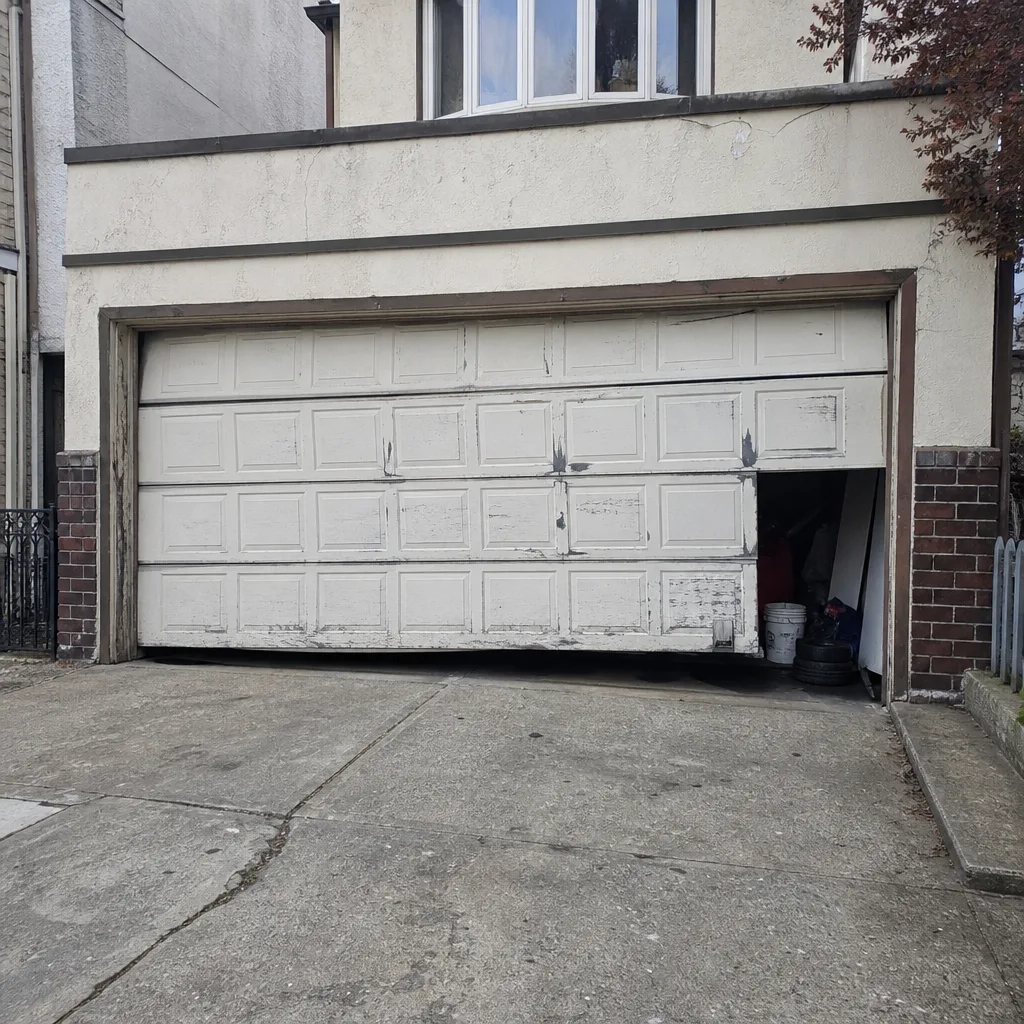 Before
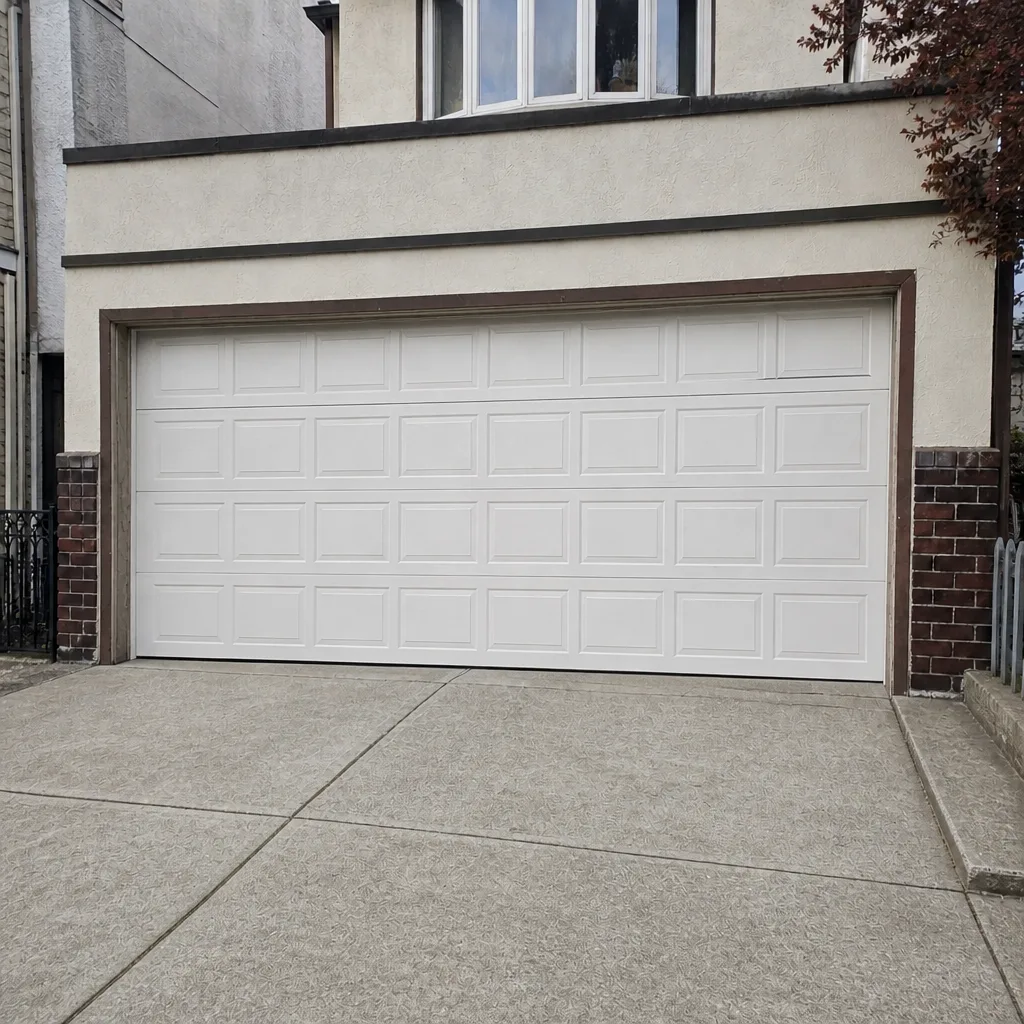 After
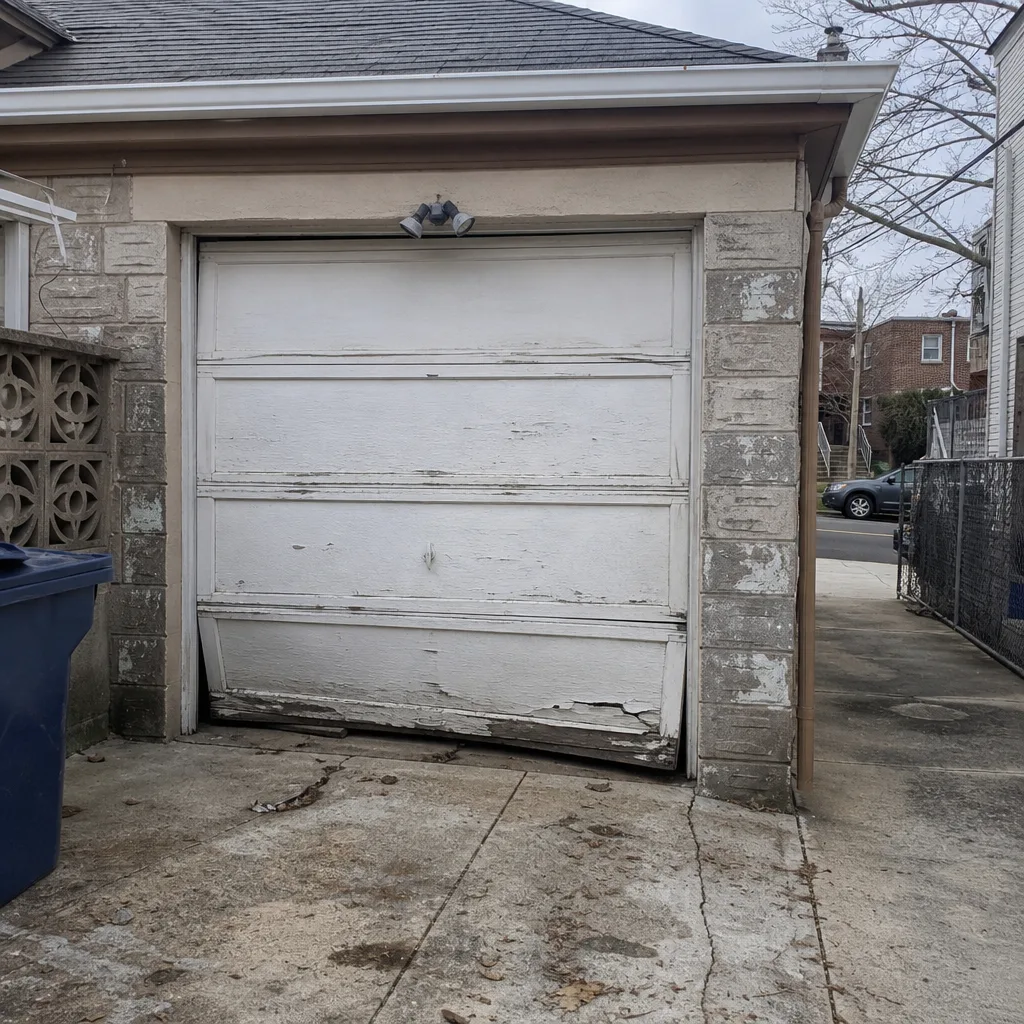 Before
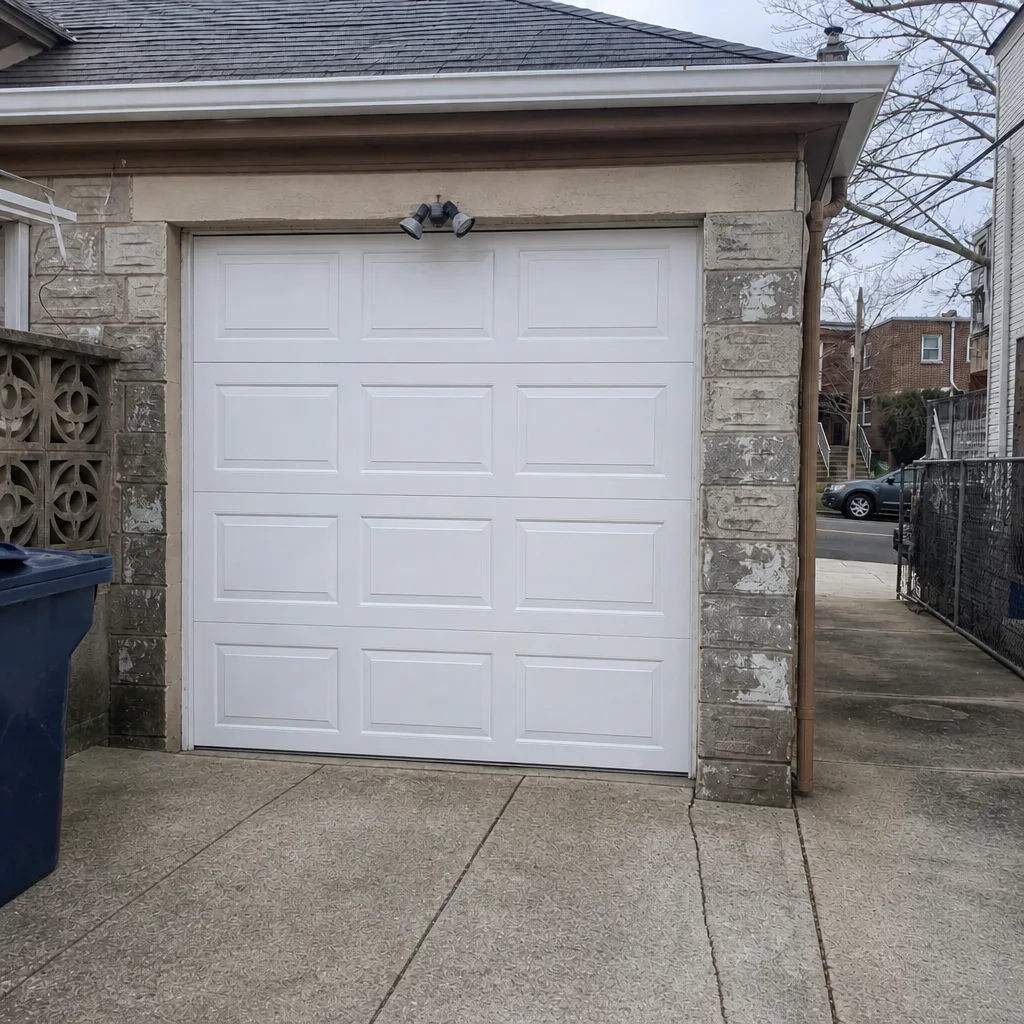 After
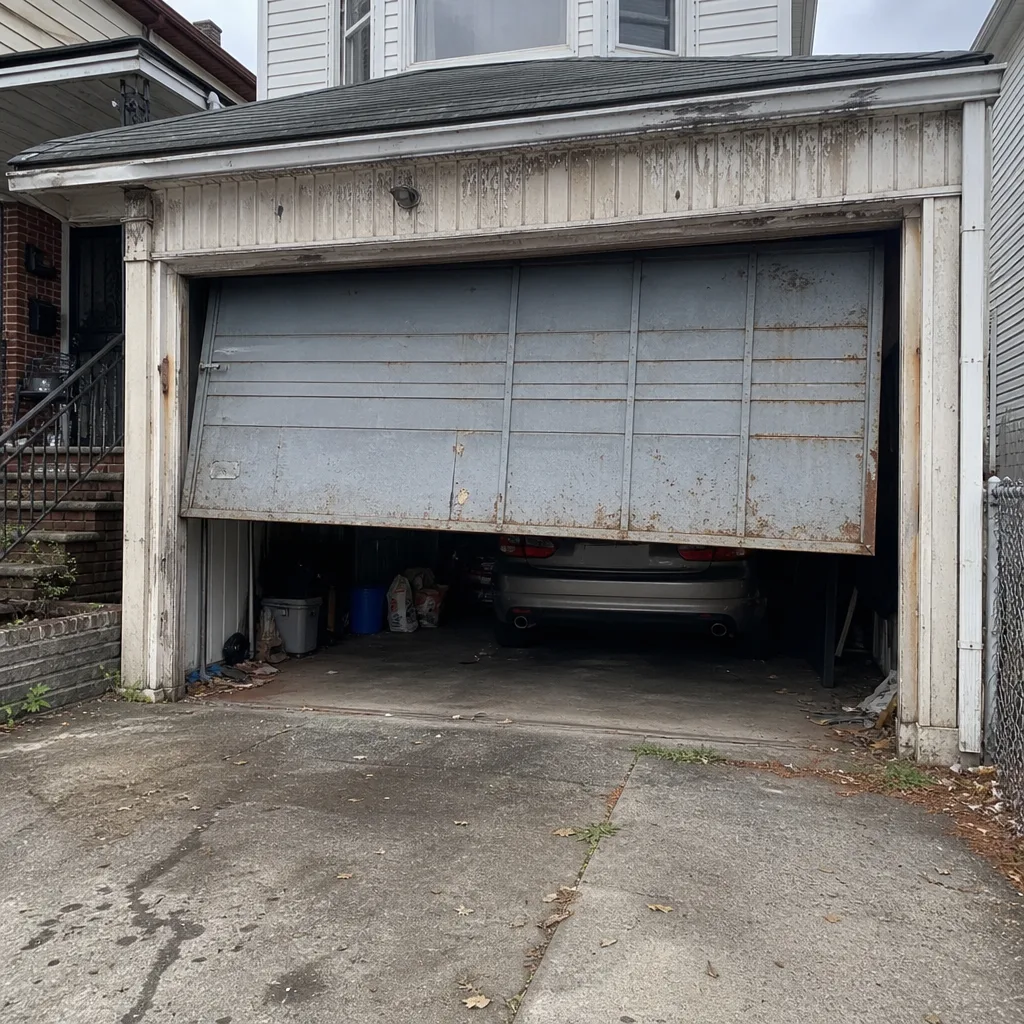 Before
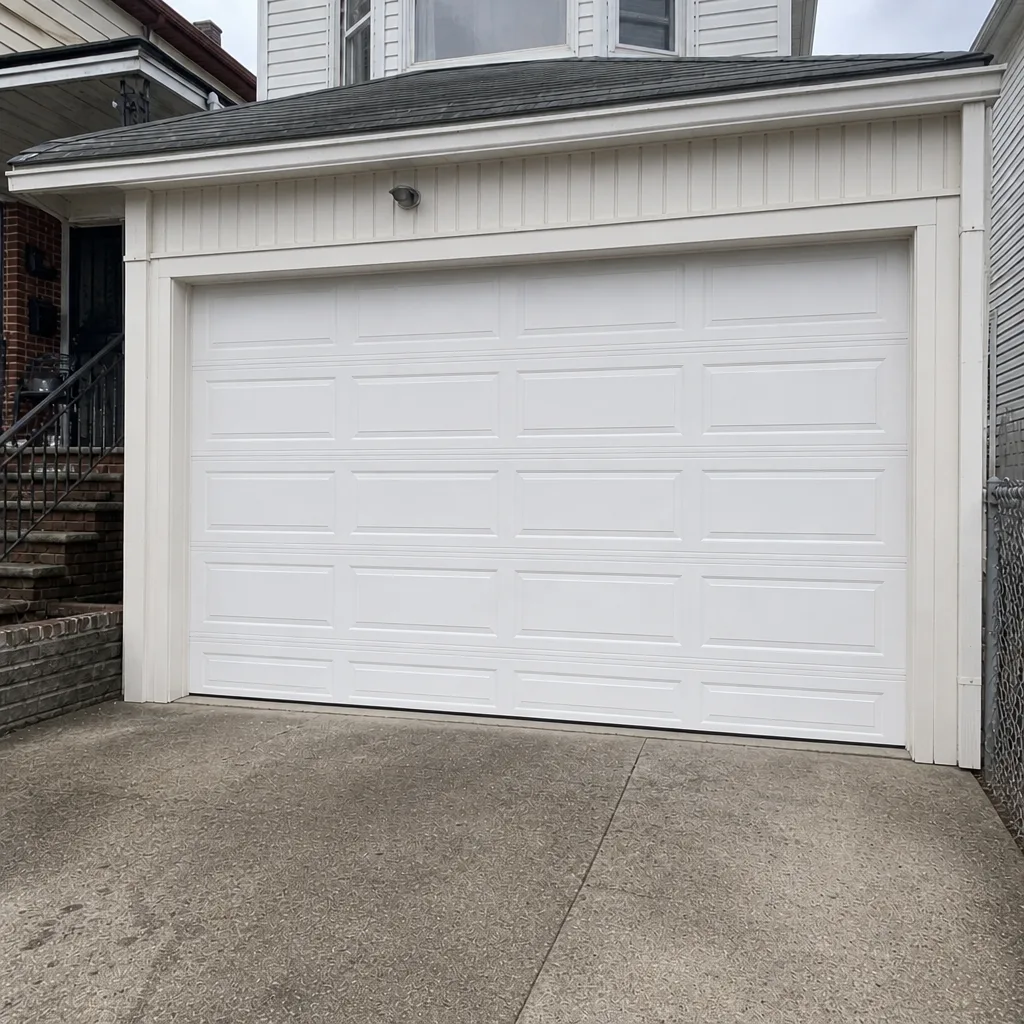 After
When to Call a Professional
Some seasonal care is a homeowner job: lubricating, wiping the tracks, watching the bottom seal. Some isn’t. Call a technician if you see a frayed cable, notice the door tilting as it rises, or find it suddenly heavy to lift. Call if a spring has snapped (stop using the door entirely, and don’t try to open it manually). Call if the door has jumped its track, if the opener keeps reversing, or if the door only binds in the heat and a simple check hasn’t explained it. And call after any significant storm if the balance test fails. Our team at Garage Door Repair Sunset Park offers free estimates in Sunset Park – call (855) 709-6141 if you’re unsure whether something needs attention. We’d rather look at it and tell you it’s fine than have you find out in February.
Frequently Asked Questions
Twice a year is the baseline, but near the waterfront we recommend timing one of those visits for fall, before the first freeze. That fall application with a corrosion-inhibiting lubricant protects the hardware through the wettest, coldest months. The second, in spring, cleans up winter wear and re-coats parts that took on moisture. If your door is within a half-mile of the bay, don’t stretch it to once a year. Call (855) 709-6141 if you’d like us to handle the lubrication and a hardware check together.
The steel panels expand in the heat, and on an older frame that expansion changes how the door sits in its tracks. It’s a real issue, not a quirk. If the door binds only on hot afternoons and runs clean in the morning, a technician should check track alignment and roller condition. Left alone, thermal binding wears the opener out faster. Call (855) 709-6141 for an estimate.
No. Torsion springs are under extreme tension and are one of the most dangerous parts of a garage door to adjust or remove. The safe approach is to stop using the door and have a trained technician handle it. Spring repair is a named specialty of ours because it’s a job that gets mishandled. Call (855) 709-6141 and we’ll get it sorted correctly.
Freeze-thaw cycles working on moisture that’s seeped under the seal at the concrete threshold. Water gets in, freezes, expands and lifts the rubber. Do that repeatedly over a winter and the adhesive bond breaks at the corners first. Replace a lifted seal before the next freeze, or the door’s bottom section takes on water. We handle it – call (855) 709-6141.
Disconnect the opener, lift the door to about waist height and let go. If it holds its position, it’s balanced. If it slides down on its own or feels much heavier than it used to, the springs need attention. Wind load from the bay can shift balance over a season of storms, so run this test after any nor’easter. Call (855) 709-6141 if it fails.
Yes. Near Upper New York Bay, use a corrosion-inhibiting lubricant rather than standard silicone spray. The difference is that a corrosion inhibitor leaves a layer that clings to the metal and displaces moisture, which is what protects springs and cables from the corrosive film that settles overnight. It’s a small change that makes a real difference on a Sunset Park door. Call (855) 709-6141 if you’d like us to apply it correctly.
The Bottom Line
Sunset Park’s position near Upper New York Bay gives its garage doors a seasonal pattern that inland guides don’t cover: corrosive humidity in summer, freeze-thaw movement at the concrete threshold in winter, and wind load from open bay exposure all year. The fix isn’t complicated. Lubricate with a corrosion-inhibiting product before winter. Check cables and bottom seals after the thaw. Watch for panel binding during heat waves. Re-test the balance after any storm. Do those four things and you’ll catch small problems before they become expensive ones. Leave the springs and cables to a trained technician, because that’s where the real danger sits. If anything in this guide has you worried about your own door, we’re happy to take a look.
Ready to get your door on a seasonal schedule? Call Garage Door Repair Sunset Park at (855) 709-6141 for a free estimate. Whether you need a routine inspection, a spring check, or a full look at how your door is holding up against another Brooklyn winter, one call covers it. We work on your brand, and we’ll tell you honestly what your door needs and what it doesn’t.
Written by the team at Garage Door Repair Sunset Park.